
Rock Identifier - AI Rock ID
Upload any rock photo for instant AI identification, Mohs hardness, and value estimates free.
Visit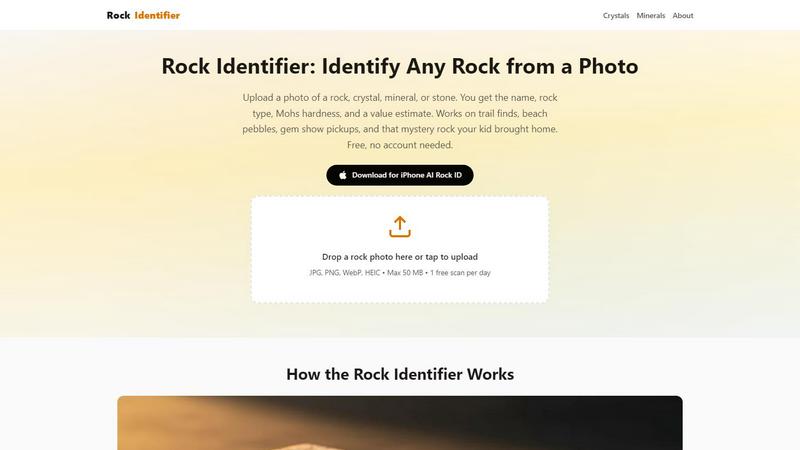
About Rock Identifier - AI Rock ID
Rock Identifier is a visual analysis tool that identifies rocks, minerals, crystals, gemstones, fossils, and gold from a single photograph. Upload or take a photo of any specimen, and the AI engine returns the name, classification, Mohs hardness, formation type, and an estimated value range. The tool is designed for students, educators, collectors, lapidary hobbyists, field geologists, and anyone sorting a mixed rock collection. It covers igneous, sedimentary, and metamorphic rocks, along with common crystals, gemstones, and minerals. The AI reads surface features including color, luster, crystal structure, grain size, fracture pattern, and transparency against a reference set of thousands of known specimens. Results appear on one screen with no textbooks required. The platform works across web, iOS, and Android, so the same workflow applies on desktop or mobile. Free identification is available with optional upgrades. Users should verify AI results with physical tests and expert references before making purchases, sales, or safety decisions. The tool is commonly used for quick checks while hiking, beachcombing, visiting museums, or reviewing finds at home.
Features of Rock Identifier - AI Rock ID
AI Photo Analysis
Upload or take a photo of any rock, crystal, mineral, gemstone, fossil, or gold specimen. The AI reads color, luster, crystal structure, grain size, fracture pattern, and transparency. It compares these features against thousands of labeled specimens to suggest a match. The analysis takes a few seconds and returns the name, classification, Mohs hardness, formation type, and value estimate on a single screen.
Category Specific Identification
The same AI engine is tuned for specific categories. Users can select from crystal identifier, stone identifier, gemstone identifier, mineral identifier, fossil identifier, diamond identifier, and gold identifier. Each tool focuses on its category for more precise results. This targeted approach improves accuracy for specialized finds like raw diamonds, gold nuggets, or fossil fragments.
Category Level Classification
The tool provides classification into igneous, sedimentary, or metamorphic rock types alongside the suggested match. Igneous rocks crystallized from molten material with interlocking crystals and no layering. Sedimentary rocks show compressed layers and bedding planes. Metamorphic rocks display foliation from tectonic pressure. This classification helps users understand the origin and formation of their specimen.
Value Estimation and Reference Details
Each identification includes an estimated value range based on the specimen type, quality indicators visible in the photo, and market data. Reference details cover Mohs hardness for scratch testing, formation type, and mineral composition. These details support learning, cataloging collections, and making informed decisions about specimens.
Use Cases of Rock Identifier - AI Rock ID
Field Identification While Hiking or Beachcombing
Hikers and beachcombers encounter rocks with no immediate way to identify them. Take a photo on the trail or shore and get the name, classification, and hardness within seconds. Wet the rock first to bring out color and grain patterns. The tool works offline after initial load, making it practical for remote areas. Results help decide which specimens are worth carrying home.
Sorting and Cataloging Rock Collections
Collectors often have mixed piles of rocks from different locations and sources. Use the tool to sort through each specimen, get a name and classification, and record the results. The value estimate helps prioritize storage and display. Students and educators use this workflow for classroom collection projects and geology labs without needing expert knowledge.
Museum and Gem Show Verification
Visitors to museums and gem shows see unfamiliar specimens on display or for sale. Snap a photo to get a second opinion on what the label says. The tool confirms or questions the identification, helping visitors learn and avoid mislabeled purchases. The Mohs hardness and formation details add context to what you are seeing.
Home Review of Mystery Rocks
Kids bring home rocks from the yard, driveway, or vacation. The mystery rock your child found can be identified in seconds. Upload the photo and get the name, type, and hardness. This turns a casual find into a learning moment. Parents and teachers use this to spark interest in geology without needing field guides or expert consultations.
Frequently Asked Questions
How does the AI identify rocks from a photo?
The AI reads visual features from the uploaded photo including color, surface luster, transparency, grain size, crystal structure, and fracture pattern. It compares these features against a reference database of thousands of labeled rock, mineral, crystal, gemstone, fossil, and gold specimens. The model was trained on labeled images to recognize the same characteristics a geologist reads at a sorting table. Results appear in seconds on one screen with the name, classification, hardness, and value estimate.
Can the tool identify gold from a photo?
Yes, Rock Identifier includes gold identification support as part of its photo analysis. The gold identifier tool is tuned to recognize gold nuggets, gold ore, and fool s gold like pyrite. The AI distinguishes between gold and common misidentifications by reading luster, hardness indicators, and fracture patterns. Results include the likely identification and a note about verification. Physical scratch tests are recommended to confirm AI results before any purchase or sale.
Is there a free version of Rock Identifier?
Yes, Rock Identifier offers free identification with one free scan per day. No account is needed to use the free version. Optional upgrades provide additional scans and advanced features. The free version covers all categories including rocks, minerals, crystals, gemstones, fossils, diamonds, and gold. Users can test the tool with their first specimen at no cost to see if it meets their needs.
How accurate is the AI identification?
The AI provides a suggested match based on visual features compared to thousands of known specimens. Accuracy depends on photo quality, lighting, and specimen condition. Wetting the rock before photographing improves results by bringing out color and grain patterns. The tool is designed for quick field identification and learning, not for scientific certification. AI results should be verified with physical tests like scratch testing and expert references before making purchases, sales, or safety decisions.
Explore more in this category:
Similar to Rock Identifier - AI Rock ID



GenogramLab
GenogramLab is an AI-powered online genogram maker that turns family descriptions into editable diagrams, helping you visualize family structures and

Free Gemini Omni
Create, remix, and edit cinematic AI videos online with Free Gemini Omni using text, image, audio, and video prompts.



amaze.directory
Find an AI tool by the job you need done, not the buzzword.