
Editaimg vs vaethat
Side-by-side comparison to help you choose the right AI tool.

Editaimg
Editaimg transforms your images instantly using simple text prompts and AI-powered editing tools.
Last updated: February 28, 2026

vaethat
Vaethat instantly enhances architectural renders with specialized AI, preserving your original design.
Last updated: February 28, 2026
Visual Comparison
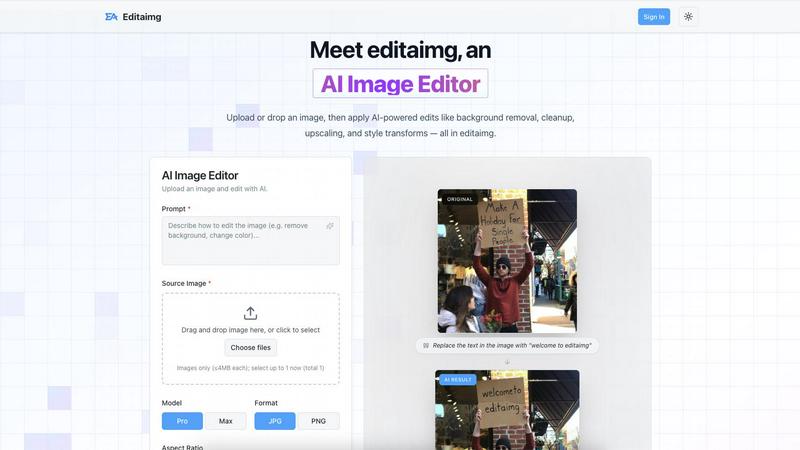
Editaimg
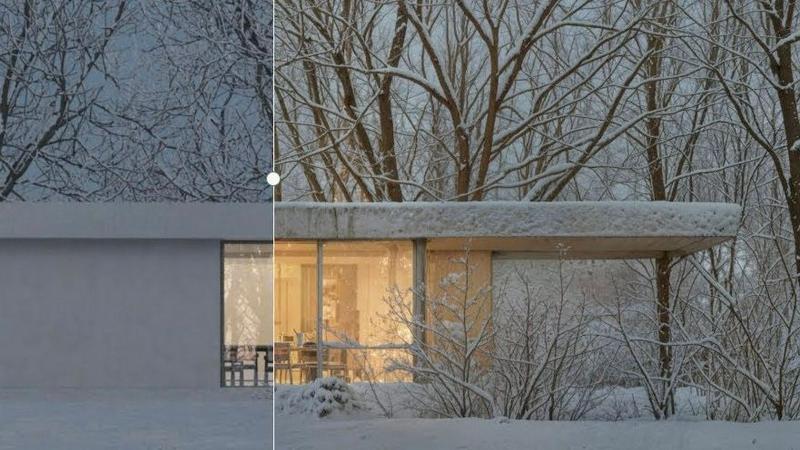
vaethat
Feature Comparison
Editaimg
Prompt-Based AI Image Editor
At the heart of Editaimg is its intuitive, prompt-driven editing interface. Users simply upload an image and describe the change they want in natural language, such as "remove people from the background" or "place this bottle on the kitchen sink." The AI interprets these text prompts to execute complex edits instantly. This feature eliminates the need for manual masking, layer management, and technical know-how, turning the editing process into a straightforward conversation and empowering anyone to achieve precise, professional results.
Specialized Niche Tools
Beyond general editing, Editaimg offers a suite of specialized tools targeting specific creative needs. This includes a dedicated Gemini Watermark Remover for clean exports, an AI Snow effect generator to add realistic seasonal atmosphere to images, and an intelligent "Add Someone to Photo" tool that blends new subjects into existing photos naturally. These focused features solve common, yet often overlooked, pain points that generic editors fail to address efficiently.
Image Text Editor
This powerful feature allows users to add, edit, or remove text from within any image seamlessly. The AI doesn't just overlay text; it intelligently matches the existing image's fonts, colors, textures, and lighting to make new text appear native to the original scene. Whether correcting a typo on a meme, updating a promotional graphic, or adding a caption, this tool ensures text integrations look authentic and professionally done.
Non-Destructive Editing & Instant Preview
Editaimg's workflow is built for speed and experimentation. All edits are non-destructive, meaning the original image remains untouched. Users receive instant previews of their AI-generated results in a clean grid layout, allowing for quick comparison and iteration. Once satisfied, final images can be downloaded or shared directly with a single click, streamlining the entire process from idea to final asset.
vaethat
Specialized Archviz AI Enhancement
Vaethat's core technology is an AI model trained exclusively on architectural visualization imagery. This specialized training allows it to intelligently upscale resolution, refine fine details like textures and edges, and enhance materials and lighting in a way that generic AI models cannot. It automatically recognizes and properly handles architectural elements, vegetation, and human figures, ensuring enhancements boost realism without introducing artifacts or altering the design's fundamental composition.
Multi-Image Project Workspace
This feature allows professionals to work efficiently with entire archviz projects. Users can drag and drop a complete folder of renders into the workspace, save sessions, and process multiple images in one batch. This streamlines the workflow for finalizing large sets of visuals for a project, ensuring consistent enhancement quality across all images and saving significant time compared to processing files individually.
No-Prompt, Preset-Based Workflow
Vaethat eliminates the guesswork and time consumption associated with prompt engineering and slider adjustments found in general AI tools. The process is deliberately simple: upload your render, choose an enhancement preset tailored for archviz, and export the result. This intuitive approach guarantees predictable, high-quality outcomes without wasting credits on trial-and-error experimentation.
Design Intent Preservation & Artifact Cleanup
A critical feature for professionals, Vaethat's AI is engineered to enhance an image while meticulously maintaining the original composition, lighting mood, and architectural design. Simultaneously, it actively reduces common rendering noise and artifacts, producing cleaner, sharper, and more polished final images that remain true to the artist's vision while achieving a higher standard of finish.
Use Cases
Editaimg
E-commerce & Product Photography
Online sellers and small business owners can use Editaimg to create stunning, context-rich product photos without expensive photoshoots. Simply upload a product shot against a plain background and use a prompt like "place this soap dispenser on a modern kitchen sink" to generate realistic lifestyle imagery. This transforms basic catalog images into compelling visual marketing assets that boost sales.
Content Creation & Social Media Management
Bloggers, social media managers, and digital marketers can rapidly produce high-quality visuals for their content calendars. Editaimg is perfect for creating custom graphics, removing unwanted elements or photobombers from photos, adding thematic effects like snow for holiday posts, or quickly editing text on images for announcements and promotions, all while maintaining a consistent, professional brand aesthetic.
Personal Photo Enhancement
Individuals can effortlessly perfect their personal photos. Remove distracting objects like utility poles from vacation landscapes, erase strangers from group shots at tourist sites, or even creatively add a friend who missed the picture using the "Add Someone to Photo" tool. This allows anyone to achieve clean, beautiful memories worthy of framing or sharing.
Professional Document & Presentation Design
Professionals preparing reports, pitches, or presentations can use Editaimg to quickly create and refine custom visuals. The Image Text Editor is ideal for updating charts and infographics, while the object replacement feature can subtly alter product mockups or concept images. This ensures all visual materials are polished, accurate, and tailored to the specific message without requiring a design department.
vaethat
Finalizing Client Presentation Decks
Architectural visualizers can use Vaethat to give their final renders a last-pass polish before including them in client presentations. The AI enhances sharpness, cleans up noise, and boosts material realism, making the visuals more compelling and professional, which can aid in securing project approvals and impressing stakeholders.
Enhancing Portfolio Imagery
For artists and studios building their online portfolio, Vaethat provides an efficient way to elevate existing work. By upscaling resolution and refining details, it helps create stunning, high-fidelity images that showcase their skills in the best possible light, attracting higher-quality clients and projects.
Batch Processing Project Deliverables
When a visualization project involves dozens of renders for different angles, times of day, or material options, Vaethat's Multi-Image Workspace is invaluable. It allows for the consistent enhancement of an entire set of deliverables in one go, ensuring uniform quality and saving hours of manual post-production work.
Salvaging Noisy or Low-Resolution Renders
Instead of re-rendering a scene at a higher sample count or resolution—a time-consuming and computationally expensive process—artists can use Vaethat to intelligently upscale and denoise existing renders. This recovers time and computational resources while transforming usable but imperfect images into clean, high-resolution finals.
Overview
About Editaimg
Editaimg is an AI-powered image editor designed to democratize professional-grade visual editing. It bridges the gap between creative vision and polished output by replacing complex, manual tools with a simple, conversational interface. The platform is built for non-designers, solo founders, content creators, and marketers who need to produce high-quality visuals quickly but lack the time or expertise for traditional software like Photoshop. Its core value proposition lies in transforming sophisticated editing tasks—such as object removal, background replacement, and text editing—into processes that take seconds, not hours. By leveraging generative AI, Editaimg acts as a productivity engine, allowing users to iterate as fast as they think. It operates entirely in the browser, requiring no downloads, and focuses on solving specific, everyday creator pain points with niche tools, making professional visual content accessible to everyone without a steep learning curve.
About vaethat
Vaethat is a specialized AI render enhancer built exclusively for architectural visualization. It is designed for archviz professionals, including 3D artists, architects, and visualization studios, who seek to elevate the final quality of their renders without the complexity of manual post-production or generic AI tools. The core value proposition lies in its purpose-built technology: unlike general AI image enhancers, Vaethat's AI is trained specifically on architectural visualization imagery. This ensures it understands the unique elements of archviz, such as clean geometry, material fidelity, and balanced lighting, resulting in enhancements that respect and preserve the original design intent. The platform offers a streamlined, no-fuss workflow where users can upload single images or entire project folders, select a preset, and receive upscaled, refined, and noise-free images that are presentation-ready for client decks, portfolios, and approvals. Vaethat prioritizes a quality-over-quantity approach, delivering consistent, high-fidelity enhancements that improve clarity, sharpness, and realism with minimal user intervention.
Frequently Asked Questions
Editaimg FAQ
How does the prompt-based editing work?
You upload your image to the Editaimg platform and describe the desired edit in the prompt box using plain English. For example, you could type "replace the text with 'Welcome to Editaimg'" or "swap the background to a beach." Our generative AI model then interprets your request, understands the context of the image, and executes the precise alteration, providing you with a new, edited version in seconds.
What image formats and sizes does Editaimg support?
Editaimg supports common image formats such as JPG, PNG, and WebP. You can upload up to 8 source images at a time, with each file being a maximum of 10MB. The platform also allows you to select output quality (like 1K or 2K) and various aspect ratios (1:1, 16:9, etc.) to suit your specific needs for web or print.
Is the "Add Someone to Photo" feature realistic?
Yes, the AI is specifically trained to handle the complex task of person insertion with natural blending. It analyzes the lighting, shadows, perspective, and color palette of the target photo to seamlessly integrate the new subject, making them appear as if they were originally part of the scene. The result is a cohesive and realistic composite image.
Do I need to download any software to use Editaimg?
No, Editaimg is a completely web-based application that runs in your browser. There is no software to download or install. You can access all features directly from our website, making it convenient to use on any device with an internet connection, and your generation history is saved when you sign in.
vaethat FAQ
What makes Vaethat different from other AI image enhancers?
Vaethat is not a general-purpose AI tool. It is specialized technology trained exclusively on architectural visualization. This means it understands the specific needs of archviz, such as preserving clean lines, correctly enhancing materials like wood and concrete, and realistically improving vegetation and people. The result is more consistent, reliable, and context-aware enhancements compared to tools that treat all images the same.
Can I use Vaethat with renders from V-Ray, Lumion, Enscape, etc.?
Yes, absolutely. Vaethat is render-engine agnostic. It works with any image file exported from your visualization software, whether it's V-Ray, Corona, Lumion, Enscape, Twinmotion, 3ds Max, SketchUp, or others. You simply upload your final PNG, JPG, or TIFF render for enhancement.
How does the credit system work?
Credits are consumed based on the output resolution of your enhanced image. The platform clearly indicates how many credits an enhancement will use before you process it. This transparent system allows you to manage your usage effectively across different projects and image sizes.
Does Vaethat use my uploaded renders to train its AI models?
No. According to the provided content, Vaethat does not use customer-uploaded architectural renders to train its AI models. This protects your intellectual property and ensures your project visuals remain confidential.
Alternatives
Editaimg Alternatives
Editaimg is a generative AI image editor that simplifies complex visual tasks like background swapping and object removal through intuitive text prompts. It belongs to the category of design and photo editing tools, specifically built to empower non-designers and solo creators by removing technical barriers. Users often explore alternatives for various reasons. These can include budget constraints, the need for different feature sets like advanced layer editing, or platform-specific requirements such as desktop software versus a browser-based tool. Some may seek tools with a broader scope or different pricing models. When evaluating other options, consider your primary use case. Look for a tool that balances ease of use with the specific capabilities you need most, whether that's speed, creative control, or integration into your existing workflow. The right choice should feel like a natural extension of your creative process, not a hurdle.
vaethat Alternatives
Vaethat is an AI-powered tool in the architectural visualization and design software category. It specializes in intelligently upscaling and refining 3D renders to enhance clarity, detail, and realism for final presentation. Professionals may explore alternatives for various reasons, such as budget constraints, a need for different feature sets like broader image editing capabilities, or specific workflow integrations. The search often centers on finding a tool that aligns with their project scale, technical requirements, and desired output quality. When evaluating options, key considerations include the core AI enhancement capabilities, the tool's fidelity in preserving original design intent, the simplicity of the user workflow, and the overall value relative to cost. The goal is to find a solution that efficiently elevates render quality without introducing unnecessary complexity.