
Modelfy 3D vs vaethat
Side-by-side comparison to help you choose the right AI tool.

Modelfy 3D
Instantly transform any image into stunning 3D models with Modelfy 3D's advanced AI technology.
Last updated: February 28, 2026

vaethat
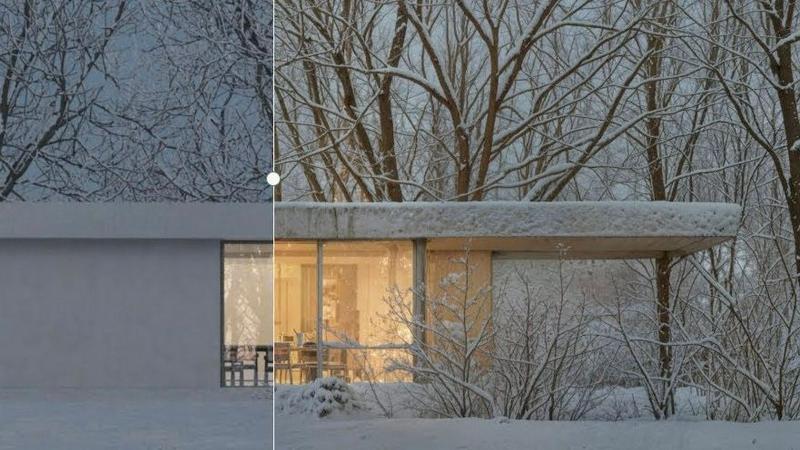
Vaethat instantly enhances architectural renders with specialized AI, preserving your original design.
Last updated: February 28, 2026
Visual Comparison
Modelfy 3D
vaethat
Feature Comparison
Modelfy 3D
AI Image to 3D Model Generator
Modelfy 3D's core feature is its AI-powered image-to-3D model generator. Users can upload a 2D image, and within minutes, receive a detailed 3D model with up to 300,000 polygons. This technology dramatically reduces the time needed for 3D modeling, transforming days of work into just a few minutes.
Multi-Format Export System
The platform supports a multi-format export system, allowing users to download their AI-generated 3D models in various industry-standard formats. Whether you need GLB for web applications, OBJ for 3D software, or STL for 3D printing, Modelfy 3D ensures compatibility with your project requirements.
Professional Asset Management System
Modelfy 3D features an enterprise-grade asset management system designed for efficiency. Users can organize their 3D conversions by filtering projects based on status, favoriting important work, and archiving completed models, all while managing custom titles, descriptions, and tags for easy retrieval.
Ultra-Precision Modeling
With a focus on quality, Modelfy 3D allows users to generate models with varying polygon counts, from 15K to an impressive 300K polygons. This ensures that whether for rapid prototyping or production-ready assets, users can achieve the precision and detail necessary for their specific project needs.
vaethat
Specialized Archviz AI Enhancement
Vaethat's core technology is an AI model trained exclusively on architectural visualization imagery. This specialized training allows it to intelligently upscale resolution, refine fine details like textures and edges, and enhance materials and lighting in a way that generic AI models cannot. It automatically recognizes and properly handles architectural elements, vegetation, and human figures, ensuring enhancements boost realism without introducing artifacts or altering the design's fundamental composition.
Multi-Image Project Workspace
This feature allows professionals to work efficiently with entire archviz projects. Users can drag and drop a complete folder of renders into the workspace, save sessions, and process multiple images in one batch. This streamlines the workflow for finalizing large sets of visuals for a project, ensuring consistent enhancement quality across all images and saving significant time compared to processing files individually.
No-Prompt, Preset-Based Workflow
Vaethat eliminates the guesswork and time consumption associated with prompt engineering and slider adjustments found in general AI tools. The process is deliberately simple: upload your render, choose an enhancement preset tailored for archviz, and export the result. This intuitive approach guarantees predictable, high-quality outcomes without wasting credits on trial-and-error experimentation.
Design Intent Preservation & Artifact Cleanup
A critical feature for professionals, Vaethat's AI is engineered to enhance an image while meticulously maintaining the original composition, lighting mood, and architectural design. Simultaneously, it actively reduces common rendering noise and artifacts, producing cleaner, sharper, and more polished final images that remain true to the artist's vision while achieving a higher standard of finish.
Use Cases
Modelfy 3D
Game Development
Game developers can leverage Modelfy 3D to quickly create immersive 3D assets from concept art or character designs. The rapid conversion process allows for faster iterations, enabling teams to refine their designs and streamline the game development workflow.
3D Printing
Modelfy 3D is an ideal tool for hobbyists and professionals in the 3D printing space. Users can convert their 2D designs into printable 3D models, ensuring high detail and quality. This capability enhances the prototyping process and allows for quick adjustments to designs before printing.
Architectural Visualization
Architects and designers can utilize Modelfy 3D for architectural visualization by transforming sketches or images of building designs into detailed 3D models. This aids in client presentations, providing a clearer understanding of spatial arrangements and design elements.
Educational Purposes
Educators and students can benefit from Modelfy 3D by using it as a teaching tool for understanding 3D modeling concepts. The platform's ease of use allows students to experiment with creating models from 2D images, facilitating hands-on learning in design and technology courses.
vaethat
Finalizing Client Presentation Decks
Architectural visualizers can use Vaethat to give their final renders a last-pass polish before including them in client presentations. The AI enhances sharpness, cleans up noise, and boosts material realism, making the visuals more compelling and professional, which can aid in securing project approvals and impressing stakeholders.
Enhancing Portfolio Imagery
For artists and studios building their online portfolio, Vaethat provides an efficient way to elevate existing work. By upscaling resolution and refining details, it helps create stunning, high-fidelity images that showcase their skills in the best possible light, attracting higher-quality clients and projects.
Batch Processing Project Deliverables
When a visualization project involves dozens of renders for different angles, times of day, or material options, Vaethat's Multi-Image Workspace is invaluable. It allows for the consistent enhancement of an entire set of deliverables in one go, ensuring uniform quality and saving hours of manual post-production work.
Salvaging Noisy or Low-Resolution Renders
Instead of re-rendering a scene at a higher sample count or resolution—a time-consuming and computationally expensive process—artists can use Vaethat to intelligently upscale and denoise existing renders. This recovers time and computational resources while transforming usable but imperfect images into clean, high-resolution finals.
Overview
About Modelfy 3D
Modelfy 3D is an innovative online platform designed to revolutionize the way users create 3D models from 2D images. Utilizing advanced artificial intelligence, Modelfy 3D allows anyone—from hobbyists to professionals—to transform ordinary images into stunning 3D models in a matter of seconds. Its value proposition lies in its ability to deliver high-quality 3D assets with up to 300,000 polygons, making it perfect for applications in 3D printing, game design, and visual projects. The platform is user-friendly, requiring no prior software training, thus catering to both experienced designers and beginners. With features like a professional asset management system and multi-format export options, Modelfy 3D stands out as a comprehensive solution for anyone looking to enhance their 3D modeling workflow.
About vaethat
Vaethat is a specialized AI render enhancer built exclusively for architectural visualization. It is designed for archviz professionals, including 3D artists, architects, and visualization studios, who seek to elevate the final quality of their renders without the complexity of manual post-production or generic AI tools. The core value proposition lies in its purpose-built technology: unlike general AI image enhancers, Vaethat's AI is trained specifically on architectural visualization imagery. This ensures it understands the unique elements of archviz, such as clean geometry, material fidelity, and balanced lighting, resulting in enhancements that respect and preserve the original design intent. The platform offers a streamlined, no-fuss workflow where users can upload single images or entire project folders, select a preset, and receive upscaled, refined, and noise-free images that are presentation-ready for client decks, portfolios, and approvals. Vaethat prioritizes a quality-over-quantity approach, delivering consistent, high-fidelity enhancements that improve clarity, sharpness, and realism with minimal user intervention.
Frequently Asked Questions
Modelfy 3D FAQ
How does Modelfy 3D work?
Modelfy 3D employs advanced AI algorithms to analyze 2D images and generate corresponding 3D models. Users simply upload an image, and the AI processes it to create a detailed 3D version in minutes.
Do I need any special software to use Modelfy 3D?
No, Modelfy 3D is a web-based platform that requires no additional software installation. Users can access all features directly through their web browser, making it convenient and accessible.
Is there a limit to the number of models I can create?
Modelfy 3D offers a credit-based pricing system, allowing users to create numerous models efficiently. The platform supports unlimited concurrent conversions, enabling users to work on multiple projects simultaneously.
Can I customize the quality of my 3D models?
Yes, users can select from different quality levels when generating 3D models, ranging from 15K to 300K polygons. This flexibility ensures that you can achieve the desired level of detail for your specific project needs.
vaethat FAQ
What makes Vaethat different from other AI image enhancers?
Vaethat is not a general-purpose AI tool. It is specialized technology trained exclusively on architectural visualization. This means it understands the specific needs of archviz, such as preserving clean lines, correctly enhancing materials like wood and concrete, and realistically improving vegetation and people. The result is more consistent, reliable, and context-aware enhancements compared to tools that treat all images the same.
Can I use Vaethat with renders from V-Ray, Lumion, Enscape, etc.?
Yes, absolutely. Vaethat is render-engine agnostic. It works with any image file exported from your visualization software, whether it's V-Ray, Corona, Lumion, Enscape, Twinmotion, 3ds Max, SketchUp, or others. You simply upload your final PNG, JPG, or TIFF render for enhancement.
How does the credit system work?
Credits are consumed based on the output resolution of your enhanced image. The platform clearly indicates how many credits an enhancement will use before you process it. This transparent system allows you to manage your usage effectively across different projects and image sizes.
Does Vaethat use my uploaded renders to train its AI models?
No. According to the provided content, Vaethat does not use customer-uploaded architectural renders to train its AI models. This protects your intellectual property and ensures your project visuals remain confidential.
Alternatives
Modelfy 3D Alternatives
Modelfy 3D is an innovative tool that belongs to the design tools and generative art categories. This advanced AI image to 3D generator allows users to transform 2D images into 3D models almost instantly, making it a valuable resource for 3D printing, game development, and various professional projects. Users commonly seek alternatives to Modelfy 3D for a variety of reasons, including pricing, specific features, platform compatibility, and user experience. When searching for an alternative, it is essential to consider the ease of use, the quality of the 3D models generated, any additional features that may enhance your workflow, and the overall cost-effectiveness of the tool in relation to your needs.
vaethat Alternatives
Vaethat is an AI-powered tool in the architectural visualization and design software category. It specializes in intelligently upscaling and refining 3D renders to enhance clarity, detail, and realism for final presentation. Professionals may explore alternatives for various reasons, such as budget constraints, a need for different feature sets like broader image editing capabilities, or specific workflow integrations. The search often centers on finding a tool that aligns with their project scale, technical requirements, and desired output quality. When evaluating options, key considerations include the core AI enhancement capabilities, the tool's fidelity in preserving original design intent, the simplicity of the user workflow, and the overall value relative to cost. The goal is to find a solution that efficiently elevates render quality without introducing unnecessary complexity.