
Mod vs qtrl.ai
Side-by-side comparison to help you choose the right AI tool.

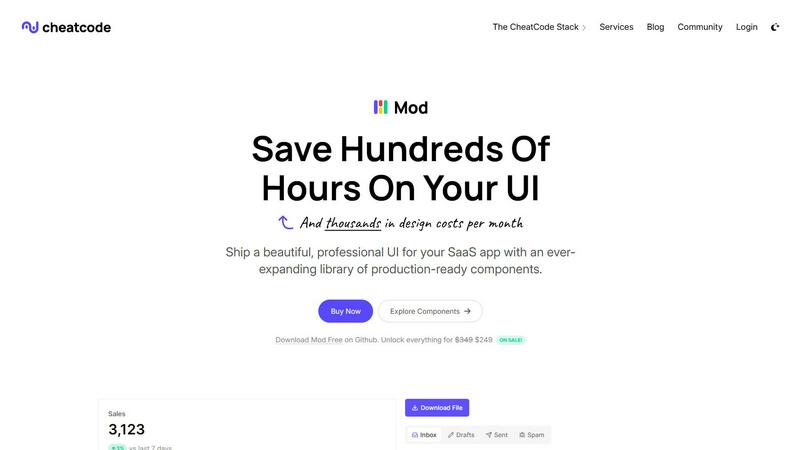
Mod is a CSS framework designed to accelerate SaaS app development with a rich library of UI components.

qtrl.ai
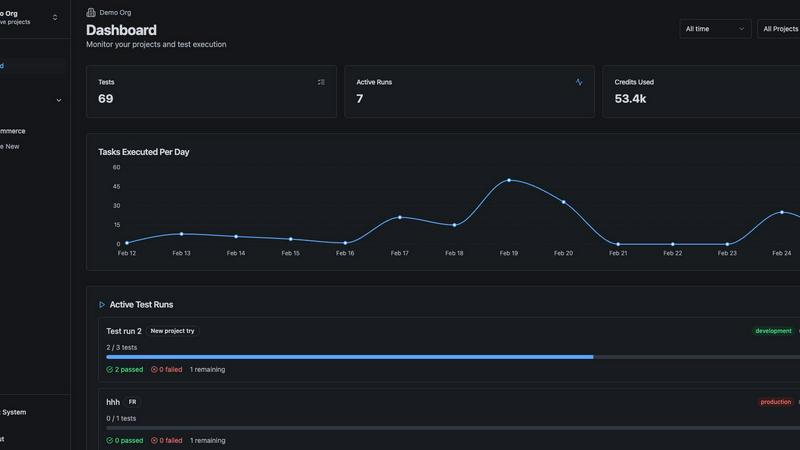
qtrl.ai scales QA testing with AI agents while ensuring full team control and governance.
Last updated: March 4, 2026
Visual Comparison
Mod
qtrl.ai
Feature Comparison
Mod
Extensive Component Library
Mod boasts an impressive library of over 88 components that are ready to use, allowing developers to quickly build complex user interfaces without starting from scratch. This extensive library accelerates the development process and enhances productivity.
Customizable Themes
With two distinct themes available, Mod provides flexibility in design choices. Developers can easily switch between themes or customize them to suit their brand identity, ensuring a unique look and feel for each application.
Icon Collection
Mod includes a vast collection of more than 1,500 icons, making it easy to incorporate visually appealing elements into applications. This extensive icon library helps maintain a cohesive design language throughout the user interface.
Dark Mode Support
Recognizing the growing demand for dark mode, Mod offers built-in support for this feature. This allows developers to create applications that cater to user preferences, enhancing usability and accessibility, especially in low-light environments.
qtrl.ai
Enterprise-Grade Test Management
qtrl provides a centralized, structured foundation for all QA activities. Teams can create, organize, and manage test cases, plans, and runs in one place. This core system ensures full traceability from requirements to test coverage and offers comprehensive audit trails, making it built for compliance and giving engineering leads clear visibility into quality status and potential risks.
Progressive AI Automation
Instead of a risky "black-box" AI-first approach, qtrl introduces intelligent automation progressively. Teams begin with human-written test instructions. When ready, they can leverage AI to generate tests from plain English descriptions. All AI-suggested tests are fully reviewable and approvable, allowing you to increase autonomy at your own pace without ever losing oversight or control.
Autonomous QA Agents
These powerful agents execute test instructions on demand or continuously across multiple browsers and environments. They operate within your defined rules and permissions, performing real browser execution—not simulations. This allows for scalable, reliable test execution that integrates seamlessly into existing development and deployment workflows.
Adaptive Memory & Governance
qtrl builds a living knowledge base of your application by learning from exploration, test execution, and issues. This adaptive memory powers smarter, context-aware test generation that improves over time. Crucially, this intelligence is coupled with governance-by-design: full agent visibility, permissioned autonomy levels, and enterprise-ready security ensure AI earns trust through transparency.
Use Cases
Mod
Rapid Prototyping
Developers can leverage Mod’s extensive component library to rapidly prototype SaaS applications, allowing for quicker iterations and user feedback. This is particularly useful in fast-paced environments where time-to-market is critical.
Responsive Design Implementation
Mod's mobile-first design approach ensures that applications look great on any device. This is essential for SaaS solutions that require accessibility across different platforms, from desktops to smartphones.
Custom Branding Solutions
With customizable themes and a wide array of components, Mod enables businesses to create tailored branding for their SaaS applications. This ensures that the final product aligns with corporate identity and resonates with target audiences.
Team Collaboration
Mod is ideal for both solo developers and larger teams, facilitating collaboration by providing a consistent design framework. This helps in maintaining uniformity across various parts of a project, making it easier for teams to work together efficiently.
qtrl.ai
Scaling Beyond Manual Testing
For QA teams overwhelmed by repetitive manual test cycles, qtrl provides a structured path forward. Start by organizing manual test cases in the platform, then progressively automate the most tedious flows using AI-generated tests. This allows teams to scale their coverage and frequency of testing without linearly increasing headcount or burnout.
Modernizing Legacy QA Workflows
Companies relying on outdated, siloed, or script-heavy automation frameworks can consolidate and modernize with qtrl. The platform brings test management, automation, and execution into a single, governed environment, replacing brittle scripts with maintainable, AI-assisted tests and providing the audit trails legacy enterprises require.
Governing AI-Powered QA
For organizations intrigued by AI automation but concerned about loss of control and auditability, qtrl offers the perfect solution. Its permissioned autonomy levels, full review cycles, and detailed execution logs ensure that AI agents operate as a transparent, accountable extension of the team, making advanced automation safe for regulated industries.
Enhancing Product-Led Engineering
Product-led engineering teams that prioritize speed and user experience need quality feedback that keeps pace. qtrl integrates with CI/CD pipelines and provides continuous quality feedback. Autonomous agents can run tests across development, staging, and production environments, ensuring rapid releases don't compromise on product stability.
Overview
About Mod
Mod is a cutting-edge CSS framework specifically designed for building sophisticated Software as a Service (SaaS) user interfaces. It integrates seamlessly into various development environments, making it highly versatile for developers of all levels. With over 88 components and more than 168 styles, Mod allows developers to create visually stunning applications without compromising on performance. Its framework-agnostic nature means it works effortlessly with popular platforms like Next.js, Nuxt, Vite, Svelte, Rails, and Django. Whether you're a solo developer or part of a larger team, Mod’s responsive, mobile-first design ensures your applications are not only functional but also aesthetically pleasing. The built-in support for dark mode and a library of over 1,500 icons further enhances user experience. Mod's simple pricing model and regular updates empower teams to streamline their development process, minimize design costs, and deliver polished SaaS applications efficiently.
About qtrl.ai
qtrl.ai is a modern QA platform engineered for software teams who need to scale their quality assurance efforts without compromising on control, governance, or trust. It addresses the fundamental tension in software testing: the slow, unscalable nature of manual processes versus the brittle, expensive complexity of traditional test automation. qtrl provides a unified solution by combining robust, enterprise-grade test management with a progressive, trustworthy layer of AI-powered automation. This creates a centralized hub where teams can meticulously organize test cases, plan and execute test runs, trace requirements to coverage, and monitor quality through real-time dashboards. The platform is designed for progression, allowing teams to start with structured manual test management and gradually introduce intelligent autonomous agents. These agents can generate and maintain UI tests from plain English, execute them at scale across real browsers and environments, and adapt as the application evolves. Built for product-led engineering teams, QA groups moving beyond manual testing, and enterprises with strict compliance needs, qtrl.ai offers a trusted, transparent path to faster, more intelligent, and fully governed quality assurance.
Frequently Asked Questions
Mod FAQ
What platforms does Mod support?
Mod is framework-agnostic and supports a variety of platforms, including Next.js, Nuxt, Vite, Svelte, Rails, and Django, offering flexibility for developers.
How many components and styles are included in Mod?
Mod includes over 88 components and more than 168 styles, providing a comprehensive toolkit for building sophisticated user interfaces.
Is there support for dark mode in Mod?
Yes, Mod includes built-in support for dark mode, allowing developers to create applications that are visually appealing and user-friendly in low-light environments.
How often are updates released for Mod?
Mod offers yearly updates, ensuring that users have access to the latest features and improvements, allowing them to stay current with design trends and technological advancements.
qtrl.ai FAQ
How does qtrl.ai ensure tests remain reliable as my application changes?
qtrl's Adaptive Memory continuously learns from your application's behavior during test execution and exploration. When UI elements or workflows change, the AI can often suggest updates to existing tests to keep them functional. Furthermore, all AI-suggested changes are presented for human review and approval, ensuring you maintain control over test maintenance.
Is qtrl.ai suitable for teams with strict security and compliance requirements?
Absolutely. qtrl is built with enterprise-grade security and governance from the ground up. Features include full audit trails, permissioned access controls, encrypted secrets management (where secrets are never exposed to the AI), and compliance-ready reporting. It is designed for teams in regulated industries that cannot compromise on oversight.
Can I use qtrl.ai alongside my existing tools like Jira or CI/CD systems?
Yes, qtrl is built for real workflows and integrates with the tools you already use. It supports requirements management integration, connects with CI/CD pipelines for automated test execution, and is designed to fit into your existing development ecosystem, providing quality feedback loops without forcing a complete toolchain overhaul.
What makes qtrl's AI different from other "autonomous" testing tools?
qtrl rejects the "black-box" AI-first model. Its AI is progressive and permissioned. You start with control and grant autonomy incrementally as the tool proves its value. Every AI-generated test or change is reviewable, and agents operate within strict rules you set. This focus on earned trust and transparency distinguishes it from unpredictable, fully autonomous solutions.