
dmaya vs Image3D AI
Side-by-side comparison to help you choose the right AI tool.

dmaya
dMaya is the AI design platform for agencies to generate client-ready UI and export to code.
Last updated: April 13, 2026

Image3D AI
Transform any 2D image into stunning, high-quality 3D models in minutes, perfect for printing or gaming, with no skills.
Last updated: March 1, 2026
Visual Comparison
dmaya
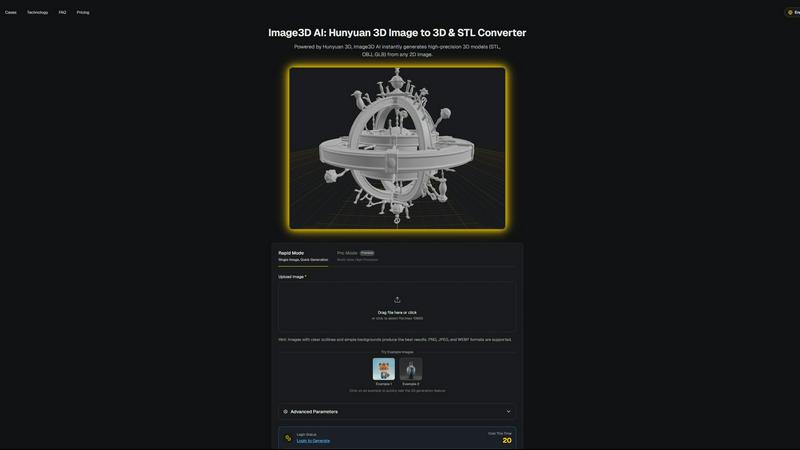
Image3D AI
Feature Comparison
dmaya
Conversational AI Design Generation
Describe your vision for a SaaS dashboard, e-commerce flow, or mobile app in plain language. dMaya's AI agent interprets your text and generates complete, production-ready UI designs with coherent layouts, component systems, and responsive variants in seconds. This foundational feature transforms abstract ideas into tangible visual starting points instantly, eliminating the blank canvas problem.
Multi-Screen Infinite Canvas
Work across multiple desktop and mobile frames simultaneously on a flexible, infinite canvas. Organize, drag, and zoom through screens with a familiar Figma-like interface, but supercharged with AI. This allows for holistic project management, enabling you to design and view entire user flows and application states side-by-side for better context and consistency.
Client Presentation & Feedback Links
Share interactive, polished previews of your work with clients or stakeholders through a single, secure link. Recipients can review the designs directly in their browser without needing an account, leave clear feedback, and grant approval. This feature professionalizes the review process, making it seamless and rapid, turning a typically protracted cycle into a matter of minutes.
Design-to-Code Export
Once a design is client-approved, export it as clean, well-structured HTML, CSS, and JavaScript code. This output is specifically formatted to be easily ingested by AI coding agents like Claude Code or Cursor, which can then transform it into production-ready code for React, Next.js, Flutter, or any other framework your development team uses, ensuring a smooth handoff.
Image3D AI
Rapid Mode
The Rapid Mode allows users to generate high-quality 3D models from a single 2D image in just a few minutes. This feature is perfect for quick projects or for users who need a fast turnaround, making it an ideal choice for those on tight deadlines.
Pro Mode
For users seeking higher precision, the Pro Mode offers multi-view capabilities, allowing for the generation of detailed and intricate 3D models. This mode is ideal for complex objects where multiple perspectives enhance the accuracy of the final model.
Advanced Image Formats
Image3D AI supports a variety of file formats such as STL, OBJ, and GLB. This versatility ensures that users can export their models in the format best suited for their specific needs, whether for 3D printing, game development, or web integration.
Best Practices Guide
The platform provides a comprehensive Best Practices Guide that helps users maximize the quality of their 3D conversions. By following these guidelines, users can significantly improve the results of their image-to-3D transformations, ensuring high-quality outputs.
Use Cases
dmaya
Agency Pitch & Concept Development
Agencies can use dMaya to rapidly generate multiple high-fidelity design concepts during client discovery calls or pitch meetings. This ability to visualize ideas in real-time helps win more business by demonstrating capability instantly. Teams can then iterate based on initial client reactions and present refined directions for sign-off in hours, not weeks.
Product Team Ideation & Prototyping
Product managers and designers can explore diverse UI directions and create interactive prototypes before committing valuable engineering resources. dMaya facilitates collaboration across design, product, and engineering in a single workspace, allowing for rapid validation of concepts and a significant reduction in the gap between what is designed and what ultimately gets built.
Freelancer Project Delivery
Freelancers and independent designers can leverage dMaya to take on more client projects without increasing their working hours. The platform dramatically accelerates the design and revision process, enabling faster turnaround times. This efficiency allows freelancers to increase their capacity, improve client satisfaction with quick iterations, and potentially command higher rates for their streamlined service.
Design System & Consistency Scaling
Teams building complex applications can use dMaya to ensure visual consistency at scale. The platform's underlying design tokens automatically maintain typography, color, and spacing rules across all generated and iterated screens. This is crucial for maintaining brand integrity and a cohesive user experience as projects grow and evolve across multiple screens and states.
Image3D AI
Game Development
Game developers can use Image3D AI to rapidly generate high-quality 3D assets from concept art or sketches. This accelerates the development process and allows for quick iterations, enabling teams to focus on gameplay rather than 3D modeling.
E-commerce Enhancement
E-commerce businesses can transform their product images into interactive 3D models, enhancing online listings and providing customers with an immersive shopping experience. This feature can significantly improve engagement and conversion rates.
3D Printing
For 3D printing enthusiasts, Image3D AI serves as a powerful image-to-STL converter, delivering print-ready files with high precision. Users can convert their designs into real-world objects effortlessly, making it an essential tool for makers and designers.
Architectural Visualization
Architects and designers can quickly generate accurate architectural models from images, saving time and improving efficiency. This feature allows professionals to visualize concepts and present designs to clients without spending hours on manual modeling.
Overview
About dmaya
dMaya is the AI design platform purpose-built for professional workflows. It is a vibe design platform created for agencies, product teams, and freelancers who understand that intentional visual design must come before code. While other AI tools skip directly to development, dMaya reinstates the critical design phase, enabling teams to make strategic decisions, align stakeholders, and catch problems early. The core value proposition is speed and precision: describe a UI concept in plain text, and dMaya generates polished, professional screens in seconds. From there, you iterate conversationally with an AI agent, making instant changes to colors, layouts, and typography while design tokens ensure visual consistency. The platform streamlines client collaboration by allowing you to share a simple preview link for feedback and approval, collapsing review cycles from days to minutes. Finally, approved designs export as clean HTML, CSS, and JS, ready to be handed to coding agents like Cursor or Claude Code for implementation in any framework. dMaya is built for teams that prioritize presentation, client sign-off, and shipping with confidence.
About Image3D AI
Image3D AI is a revolutionary tool that harnesses the power of artificial intelligence to transform static 2D images into high-quality, production-ready 3D models in mere seconds. Built on Tencent's advanced Hunyuan 3D engine, this platform democratizes 3D modeling, making it accessible to everyone, from veteran designers to casual hobbyists. With Image3D AI, users can effortlessly create intricate 3D printed objects, develop assets for video games, or enhance e-commerce listings with interactive 3D models. The intuitive interface allows for seamless generation of stunning 3D representations from single photographs or multiple views. This tool is designed to streamline workflows and enable users to bring their creative visions to life faster and easier than ever before.
Frequently Asked Questions
dmaya FAQ
Who is dMaya built for?
dMaya is purpose-built for professional design workflows used by digital agencies, in-house product teams, and freelance designers. It is specifically for those who need to create, present, and iterate on visual designs with clients and stakeholders before any development begins. It is not aimed at solo enthusiasts looking to immediately generate final code without a design phase.
How does the AI design iteration work?
You interact with dMaya through a chat interface. After the initial design is generated, you can instruct the AI using natural language. For example, you can ask to "change the primary color to navy blue," "swap the sidebar to the right," "increase the font size of the headers," or "add a testimonial section." The AI executes these changes precisely and instantly on your canvas.
What kind of code does dMaya export?
dMaya exports clean, semantic HTML, CSS, and vanilla JavaScript. This code is not framework-specific but is intentionally structured to be easily parsed and converted by modern AI coding assistants. You can hand this code to an agent like Cursor or Claude Code with instructions to rebuild the components in your chosen framework, such as React, Next.js, or Flutter.
How do clients review designs without an account?
You simply generate a shareable preview link from within your dMaya project. When you send this link to a client, they can open it in any modern web browser. They will see an interactive, high-fidelity version of your designs where they can click through flows, leave feedback comments directly on the design, and mark their approval, all without needing to sign up or log in.
Image3D AI FAQ
What types of images work best for conversion?
Images with clear outlines and simple backgrounds yield the best results for 3D conversion. High-contrast images are recommended, while blurry or low-light images may not produce accurate models.
Can I generate 3D models from a single image?
Yes, Image3D AI's Rapid Mode allows users to create 3D models from a single image. However, for more complex objects, using multiple views is advisable for better accuracy.
What file formats can I export my 3D models to?
You can export your models in several formats, including STL for 3D printing, OBJ for traditional editing, and GLB for web and AR applications, ensuring versatility for various projects.
How long does it take to generate a 3D model?
Using the Rapid Mode, users can expect to generate a 3D model in approximately 60 seconds, making the process quick and efficient, which is especially beneficial for time-sensitive projects.
Alternatives
dmaya Alternatives
dMaya is an AI-powered vibe design platform that streamlines the early-stage visual design process for agencies, teams, and freelancers. It belongs to the category of AI design tools, specifically those that facilitate rapid UI prototyping and client collaboration before a single line of code is written. Users often explore alternatives to find a solution that best fits their specific workflow, budget constraints, or technical requirements. The search for a different tool can be driven by various factors, such as pricing models, the need for specific integrations, or a desire for different output formats. Some teams may prioritize granular design control, while others seek more advanced collaboration features or support for particular design systems. When evaluating options, it's crucial to consider your core needs. Key factors include the quality and speed of AI-generated designs, the intuitiveness of the iteration process, the effectiveness of client feedback tools, and the cleanliness and utility of the exported code. The ideal platform should reduce friction from concept to client approval to developer handoff.
Image3D AI Alternatives
Image3D AI is a revolutionary tool in the design category, enabling users to convert static 2D images into high-quality 3D models effortlessly. This AI-driven platform stands out for its accessibility, catering to a wide range of users, from professional designers to hobbyists seeking to enhance their creative projects. Many users seek alternatives to Image3D AI for various reasons, including pricing structures, specific feature sets, or compatibility with different platforms. When exploring alternatives, it is essential to consider the tool's ease of use, the quality of generated outputs, and the range of supported file formats to ensure it meets your unique project requirements.