
Blueberry vs qtrl.ai
Side-by-side comparison to help you choose the right AI tool.

Blueberry
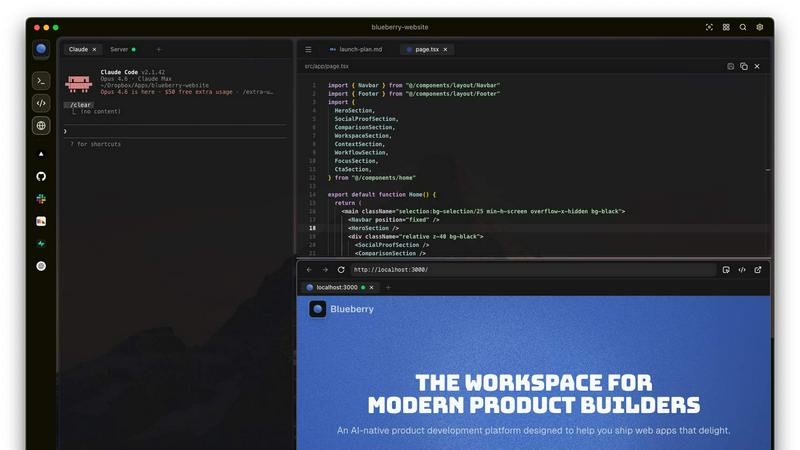
Blueberry is an AI-native Mac workspace that unites your editor, terminal, and browser for seamless product development.
Last updated: February 28, 2026

qtrl.ai
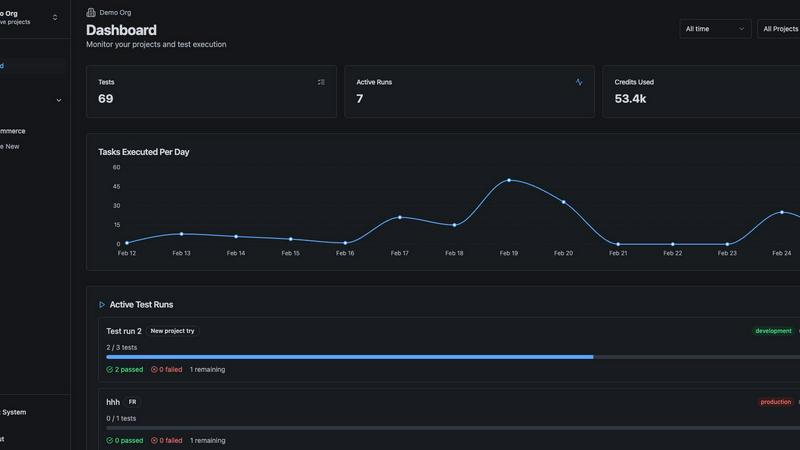
qtrl.ai helps QA teams scale testing with AI agents while keeping full control and governance.
Visual Comparison
Blueberry
qtrl.ai
Overview
About Blueberry
Blueberry is an AI-native product development platform for macOS, designed to fundamentally change how modern product builders work. It consolidates the essential tools of web development—a code editor, terminal, and live preview browser—into a single, focused workspace. This eliminates the constant, disruptive context-switching between disparate applications, allowing developers and builders to maintain deep focus and flow. Blueberry is built for the new era of AI-assisted development, where the assistant is not just an add-on but a core, integrated member of the team. Its key innovation is providing AI models like Claude, Gemini, or Codex with full, real-time context over your entire project through its built-in MCP (Model Context Protocol) server. This means your AI can see your open files, terminal output, browser state, and even pinned applications like Figma or Linear, enabling it to offer precise, context-aware assistance without the need for manual copy-pasting. The platform is crafted to help you ship web applications that delight, offering a seamless, unified environment from initial code to final preview across all device types. It is currently free during its beta period.
About qtrl.ai
qtrl.ai is a modern QA platform designed to help software teams scale their quality assurance efforts without sacrificing control or governance. It uniquely combines enterprise-grade test management with powerful, trustworthy AI automation. At its core, qtrl provides a centralized hub where teams can organize test cases, plan test runs, trace requirements to coverage, and track quality metrics through real-time dashboards. This structured foundation ensures clear visibility into what's been tested, what's passing, and where potential risks lie for engineering leads and QA managers.
Where qtrl truly stands apart is its progressive AI layer. Instead of forcing a risky, "black-box" AI-first approach, qtrl introduces intelligent automation gradually. Teams can start with simple manual test management and, when ready, leverage built-in autonomous agents. These agents can generate UI tests from plain English descriptions, maintain them as the application evolves, and execute them at scale across multiple browsers and environments. This makes qtrl perfect for product-led engineering teams, QA groups moving beyond manual testing, companies modernizing legacy workflows, and enterprises that require strict compliance and audit trails. Ultimately, qtrl's mission is to bridge the gap between the slow pace of manual testing and the brittle complexity of traditional automation, offering a trusted path to faster, more intelligent quality assurance.