
Game Server Backend
Game Server Backend unifies player auth, data, leaderboards, and server hosting into one simple API for multiplayer games.
Visit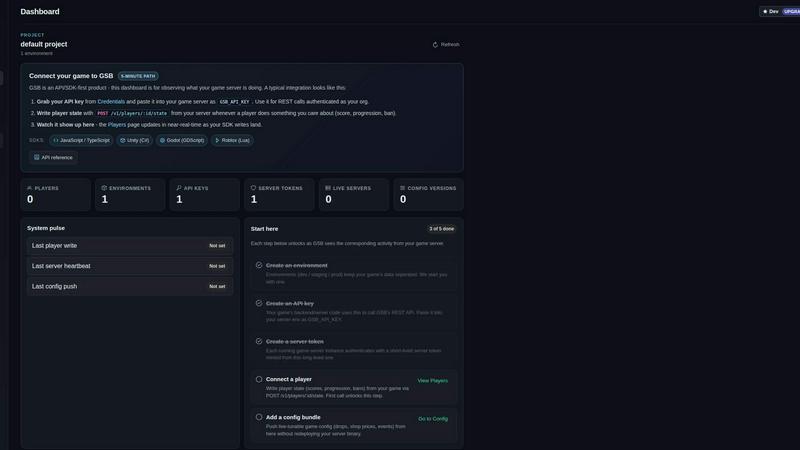
About Game Server Backend
Game Server Backend (GSB) is a hosted backend platform purpose-built for studios and indie developers creating multiplayer games. It bundles all the operational infrastructure a multiplayer title needs behind a single, unified API, so teams can ship their game without the pain of rebuilding backend services from scratch. GSB covers matchmaking, leaderboards with both global and regional scopes, player profiles, persistent JSON state per user, a server registry for community-server discovery, in-game economy primitives, and a live-ops configuration layer that lets you push gameplay tuning updates without requiring a client patch. Three authentication paths are supported out of the box: anonymous accounts that can upgrade later, passwordless email sign-in, and Steam OpenID for PC titles. Drop-in SDKs ship for Unity, Unreal Engine, and Godot, each wrapping the underlying REST layer in idiomatic, type-safe APIs so existing engine patterns work without ceremony. The platform also integrates seamlessly with Roblox and custom game servers, making it a versatile choice for any multiplayer project. GSB is designed to eliminate the need to stitch together separate vendors for auth, persistence, rankings, config rollout, and server discovery, providing a cleaner path from prototype to live production. With a free forever Dev plan and no credit card required, it is accessible to teams of all sizes. Most backend tools handle players, and most hosting tools handle servers. GSB brings both together, so the runtime needs of multiplayer games stop living across custom scripts, ad hoc endpoints, and operational guesswork. One platform to authenticate players, store progression and shared game state, run leaderboards and seasonal resets, register and discover dedicated servers, deliver live configs, and keep staging and production separate.
Features of Game Server Backend
Player Authentication
Email and password, guest sessions, OAuth (Google, GitHub, Discord), and Roblox verification. Support real accounts, onboarding, and authenticated player access without building auth from scratch. Anonymous accounts can upgrade later, and passwordless email sign-in provides a frictionless entry point. Steam OpenID is supported for PC titles, ensuring compatibility with major distribution platforms.
Persistent Player Data
Player-scoped and project-scoped JSON documents for progression, profiles, unlocks, event flags, inventories, and shared runtime values. This system is server-authoritative with patch semantics, meaning you can update specific fields without rewriting entire documents. It provides a reliable, structured way to store every aspect of a player's journey across sessions.
Leaderboards
Ranked and seasonal boards with configurable rules, fast ranking reads, recurring resets, and support for timed events or score-based loops. Anti-cheat friction is built into write operations, helping maintain the integrity of competitive rankings. Both global and regional scopes are supported, allowing you to tailor leaderboards to your game's community structure.
Dedicated Server Registry
Register, heartbeat, and search dedicated servers to power server browsers, active session discovery, region-aware listings, and stale cleanup. This feature enables community-server discovery and ensures that players can always find active, healthy game sessions. The registry integrates directly with matchmaking for seamless allocation of server resources.
Use Cases of Game Server Backend
Indie Multiplayer Game Launch
A small indie team developing a competitive multiplayer title can use GSB to handle all backend needs from day one. They implement player authentication with guest sessions for quick onboarding, use persistent player data to save loadouts and progression, set up seasonal leaderboards for ranked play, and deploy live configs to balance weapons without patching. The free Dev plan allows them to prototype and iterate without financial risk.
Live Operations for a Live Service Game
A studio running a live service game can leverage GSB's live config delivery to push balance changes, rotation schedules, and loot table updates multiple times per week without requiring client patches. They use the economy system for virtual currencies and item grants, leaderboards for seasonal events, and the dedicated server registry to manage a pool of rented servers. The dashboard provides real-time visibility into player writes and server health.
Community Server Browser for a Sandbox Game
A sandbox or survival game that relies on community-hosted servers can use the server registry to allow players to discover and join active sessions. The registry handles heartbeats and stale cleanup, ensuring the browser only shows healthy, online servers. Player authentication and persistent data enable cross-server profiles, so players retain their inventory and progression regardless of which community server they join.
Cross-Platform Multiplayer Prototype
A developer prototyping a cross-platform game for Unity, Godot, and Roblox can use GSB's drop-in SDKs to quickly implement a unified backend. They wire up matchmaking with region-aware allocation, use persistent data for shared game state across all platforms, and deploy live configs to tweak gameplay parameters during testing. The single API eliminates the complexity of maintaining separate backend systems for each engine.
Frequently Asked Questions
What game engines does Game Server Backend support?
GSB provides drop-in SDKs for Unity, Unreal Engine, and Godot, each wrapping the underlying REST layer in idiomatic, type-safe APIs. The platform also integrates seamlessly with Roblox and custom game servers. For any engine or custom solution, you can use the REST API directly with standard HTTP requests, as demonstrated by the JavaScript and curl examples in the documentation.
How does the free Dev plan work?
The Dev plan is free forever and requires no credit card to sign up. It provides access to all core features of the platform, including player authentication, persistent data, leaderboards, economy, server registry, live config delivery, and matchmaking. This allows teams of any size to prototype, develop, and test their multiplayer games without upfront costs or financial commitment.
Can I use Game Server Backend with my own dedicated servers?
Yes. GSB includes a dedicated server registry that allows you to register, heartbeat, and search your own servers. This powers server browsers, active session discovery, and region-aware listings. The matchmaking system can also be wired to your own servers or a reserved-server pool, giving you full control over your server infrastructure while leveraging GSB for backend services.
How does authentication work for different player types?
GSB supports three primary authentication paths out of the box. Anonymous accounts allow players to start playing immediately and can be upgraded later to permanent accounts. Passwordless email sign-in provides a frictionless authentication experience without requiring password management. Steam OpenID is supported for PC titles. Additionally, OAuth providers like Google, GitHub, and Discord are available, along with Roblox verification for Roblox-based games.
Similar to Game Server Backend


laya.tools
Free directory of 950+ projects built on Laya, the open-source model that turns text into typed decisions. Ports, SDKs, agents and demos.
Forms Plugin
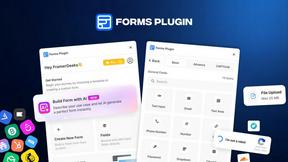
The #1 Native Form Builder Plugin for Framer - No Code, No Embeds, No External Platforms.

JsonTranslate
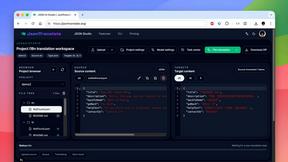
A json translater for translating JSON, Markdown, and TXT files while preserving keys, nested paths, and project structure.

AkraLabs
Where modern software products get discovered, launched, and distributed. Explore verified AI tools, SaaS startups, and developer software.

NeutrixFlow
AI tools directory with practical reviews, comparisons, and guides.