
Postproxy vs vaethat
Side-by-side comparison to help you choose the right AI tool.

Postproxy
Postproxy simplifies social media publishing by unifying multiple platforms into a single, reliable API solution.
Last updated: February 28, 2026

vaethat
Vaethat instantly enhances architectural renders with specialized AI, preserving your original design.
Last updated: February 28, 2026
Visual Comparison
Postproxy
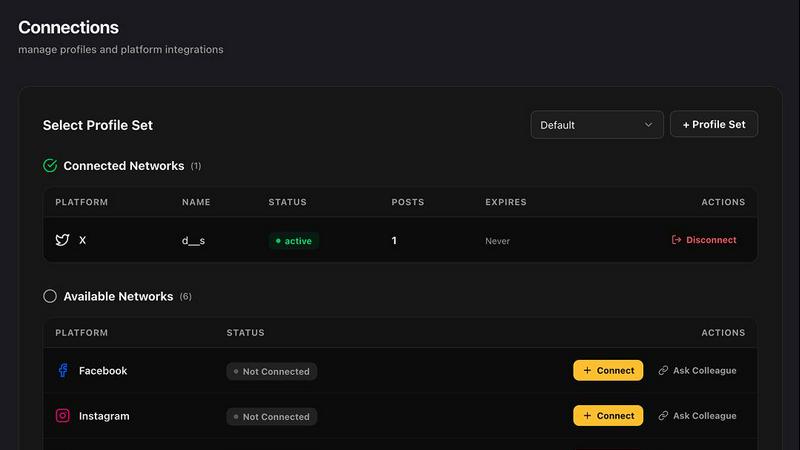
vaethat

Feature Comparison
Postproxy
Unified API Integration
Postproxy simplifies the process of social media publishing by providing a single API that integrates with multiple platforms. This eliminates the need for separate SDKs and reduces the complexity associated with managing multiple integrations, allowing developers to focus on building innovative solutions.
Automated Content Adaptation
With Postproxy, content is automatically transformed to conform to each platform's unique requirements. This feature ensures that your posts meet specific formatting standards, media limits, and text validations, minimizing the risk of errors during publishing.
Robust Error Handling
Postproxy is designed to manage operational failures gracefully. It incorporates automatic retries, rate limit handling, and quota awareness, ensuring that publishing processes are reliable and that you are always informed of the status of your requests without manual checks.
Clear Publish States
One of the standout features of Postproxy is its explicit communication of publish states. Users receive immediate feedback on what succeeded, what failed, and the reasons behind any failures, allowing for better troubleshooting and operational efficiency.
vaethat
Specialized Archviz AI Enhancement
Vaethat's core technology is an AI model trained exclusively on architectural visualization imagery. This specialized training allows it to intelligently upscale resolution, refine fine details like textures and edges, and enhance materials and lighting in a way that generic AI models cannot. It automatically recognizes and properly handles architectural elements, vegetation, and human figures, ensuring enhancements boost realism without introducing artifacts or altering the design's fundamental composition.
Multi-Image Project Workspace
This feature allows professionals to work efficiently with entire archviz projects. Users can drag and drop a complete folder of renders into the workspace, save sessions, and process multiple images in one batch. This streamlines the workflow for finalizing large sets of visuals for a project, ensuring consistent enhancement quality across all images and saving significant time compared to processing files individually.
No-Prompt, Preset-Based Workflow
Vaethat eliminates the guesswork and time consumption associated with prompt engineering and slider adjustments found in general AI tools. The process is deliberately simple: upload your render, choose an enhancement preset tailored for archviz, and export the result. This intuitive approach guarantees predictable, high-quality outcomes without wasting credits on trial-and-error experimentation.
Design Intent Preservation & Artifact Cleanup
A critical feature for professionals, Vaethat's AI is engineered to enhance an image while meticulously maintaining the original composition, lighting mood, and architectural design. Simultaneously, it actively reduces common rendering noise and artifacts, producing cleaner, sharper, and more polished final images that remain true to the artist's vision while achieving a higher standard of finish.
Use Cases
Postproxy
Streamlined Publishing for Marketing Teams
Marketing teams can leverage Postproxy to automate their social media publishing across various platforms. By integrating their content generation workflows with Postproxy, they can ensure consistent messaging and branding while saving valuable time and resources.
AI-Driven Content Distribution
Businesses utilizing AI content generation tools can seamlessly publish their outputs to multiple social media channels using Postproxy. This integration allows for efficient scaling of content distribution without the need for manual adjustments tailored to each platform.
Simplified Management for Agencies
Digital marketing agencies managing multiple clients can use Postproxy to streamline their social media publishing. With the ability to manage different accounts from a single API, agencies can reduce operational overhead while ensuring compliance with platform-specific rules.
Reliable Integration in CI/CD Pipelines
For developers implementing continuous integration and continuous deployment (CI/CD) practices, Postproxy offers a stable publishing layer. This enables automated deployment of marketing content as part of their software development lifecycle, ensuring timely and efficient delivery.
vaethat
Finalizing Client Presentation Decks
Architectural visualizers can use Vaethat to give their final renders a last-pass polish before including them in client presentations. The AI enhances sharpness, cleans up noise, and boosts material realism, making the visuals more compelling and professional, which can aid in securing project approvals and impressing stakeholders.
Enhancing Portfolio Imagery
For artists and studios building their online portfolio, Vaethat provides an efficient way to elevate existing work. By upscaling resolution and refining details, it helps create stunning, high-fidelity images that showcase their skills in the best possible light, attracting higher-quality clients and projects.
Batch Processing Project Deliverables
When a visualization project involves dozens of renders for different angles, times of day, or material options, Vaethat's Multi-Image Workspace is invaluable. It allows for the consistent enhancement of an entire set of deliverables in one go, ensuring uniform quality and saving hours of manual post-production work.
Salvaging Noisy or Low-Resolution Renders
Instead of re-rendering a scene at a higher sample count or resolution—a time-consuming and computationally expensive process—artists can use Vaethat to intelligently upscale and denoise existing renders. This recovers time and computational resources while transforming usable but imperfect images into clean, high-resolution finals.
Overview
About Postproxy
Postproxy is an advanced API solution designed to streamline social media publishing across multiple platforms, including Instagram, Facebook, YouTube, LinkedIn, and X. By offering a single, unified endpoint, Postproxy eliminates the complexities and inconsistencies associated with individual platform integrations. This service is particularly beneficial for developers, marketers, and automators who utilize tools like n8n, Zapier, and CI/CD pipelines. With Postproxy, you can automate OAuth processes, manage rate limits, and handle retries effortlessly while gaining insights through detailed analytics. The main value proposition lies in its ability to transform chaotic publishing workflows into a predictable infrastructure, enabling users to generate AI-driven content and publish at scale without the need for manual interventions. Whether you're a small startup or an established enterprise, Postproxy adapts to your needs with a free plan available, allowing you to scale as your requirements grow.
About vaethat
Vaethat is a specialized AI render enhancer built exclusively for architectural visualization. It is designed for archviz professionals, including 3D artists, architects, and visualization studios, who seek to elevate the final quality of their renders without the complexity of manual post-production or generic AI tools. The core value proposition lies in its purpose-built technology: unlike general AI image enhancers, Vaethat's AI is trained specifically on architectural visualization imagery. This ensures it understands the unique elements of archviz, such as clean geometry, material fidelity, and balanced lighting, resulting in enhancements that respect and preserve the original design intent. The platform offers a streamlined, no-fuss workflow where users can upload single images or entire project folders, select a preset, and receive upscaled, refined, and noise-free images that are presentation-ready for client decks, portfolios, and approvals. Vaethat prioritizes a quality-over-quantity approach, delivering consistent, high-fidelity enhancements that improve clarity, sharpness, and realism with minimal user intervention.
Frequently Asked Questions
Postproxy FAQ
What social media platforms does Postproxy support?
Postproxy currently supports publishing to popular platforms such as Instagram, Facebook, YouTube, LinkedIn, and X. This broad coverage allows users to reach diverse audiences through a single API.
How does Postproxy handle content formatting?
Postproxy automatically converts content to meet the specific requirements of each platform, taking care of media limits, formatting rules, and text validations. This ensures that your posts are compliant without requiring manual adjustments.
Is there a free plan available for Postproxy?
Yes, Postproxy offers a free plan that allows users to get started without any initial investment. As your needs grow, you can scale up to more advanced plans that offer additional features and capabilities.
How can I track the success of my posts with Postproxy?
Postproxy provides detailed analytics and reporting features that allow users to track the performance of their published content. You can monitor engagement metrics and other key performance indicators directly through the Postproxy interface.
vaethat FAQ
What makes Vaethat different from other AI image enhancers?
Vaethat is not a general-purpose AI tool. It is specialized technology trained exclusively on architectural visualization. This means it understands the specific needs of archviz, such as preserving clean lines, correctly enhancing materials like wood and concrete, and realistically improving vegetation and people. The result is more consistent, reliable, and context-aware enhancements compared to tools that treat all images the same.
Can I use Vaethat with renders from V-Ray, Lumion, Enscape, etc.?
Yes, absolutely. Vaethat is render-engine agnostic. It works with any image file exported from your visualization software, whether it's V-Ray, Corona, Lumion, Enscape, Twinmotion, 3ds Max, SketchUp, or others. You simply upload your final PNG, JPG, or TIFF render for enhancement.
How does the credit system work?
Credits are consumed based on the output resolution of your enhanced image. The platform clearly indicates how many credits an enhancement will use before you process it. This transparent system allows you to manage your usage effectively across different projects and image sizes.
Does Vaethat use my uploaded renders to train its AI models?
No. According to the provided content, Vaethat does not use customer-uploaded architectural renders to train its AI models. This protects your intellectual property and ensures your project visuals remain confidential.
Alternatives
Postproxy Alternatives
Postproxy is a powerful tool designed for developers and automators, facilitating seamless publishing across multiple social media platforms like Instagram, Facebook, YouTube, LinkedIn, and X through a single API. As a robust solution in the design tools category, it automates essential processes such as OAuth management, rate limiting, and content adaptation, allowing users to navigate the complexities of social media publishing with ease. Users often seek alternatives to Postproxy for various reasons, including pricing concerns, specific feature requirements, or compatibility with their existing platforms and workflows. When evaluating alternatives, it's crucial to consider factors such as ease of integration, scalability, support for different social media channels, and the availability of analytics to track performance effectively.
vaethat Alternatives
Vaethat is an AI-powered tool in the architectural visualization and design software category. It specializes in intelligently upscaling and refining 3D renders to enhance clarity, detail, and realism for final presentation. Professionals may explore alternatives for various reasons, such as budget constraints, a need for different feature sets like broader image editing capabilities, or specific workflow integrations. The search often centers on finding a tool that aligns with their project scale, technical requirements, and desired output quality. When evaluating options, key considerations include the core AI enhancement capabilities, the tool's fidelity in preserving original design intent, the simplicity of the user workflow, and the overall value relative to cost. The goal is to find a solution that efficiently elevates render quality without introducing unnecessary complexity.