
Crawlkit vs Oneprofile
Side-by-side comparison to help you choose the right AI tool.

Crawlkit
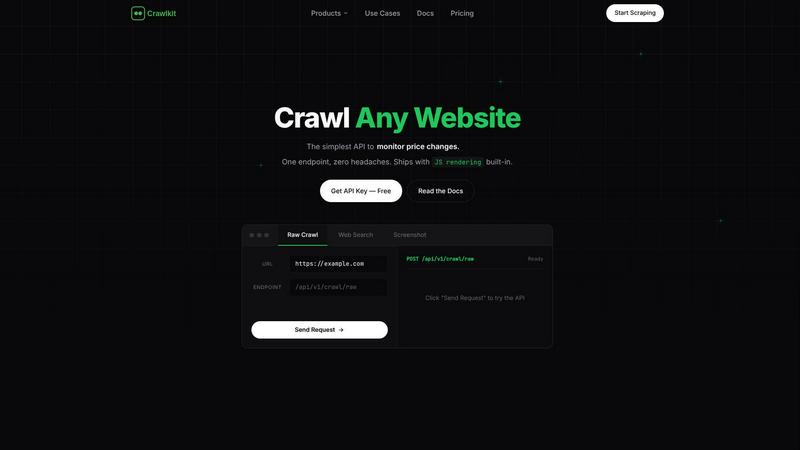
CrawlKit is an API that simplifies web scraping, enabling easy data extraction from any site or platform with a single.
Last updated: February 28, 2026

Oneprofile
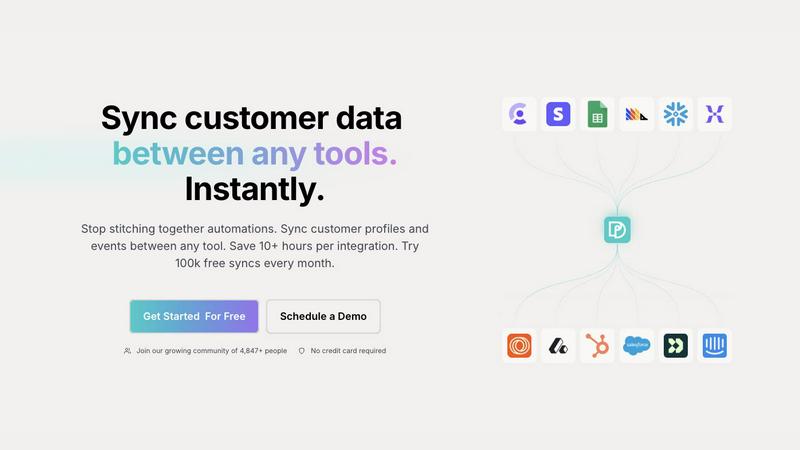
Oneprofile syncs customer data across all your tools to keep profiles consistent everywhere.
Last updated: February 28, 2026
Visual Comparison
Crawlkit
Oneprofile
Feature Comparison
Crawlkit
Unified API Access
CrawlKit provides a single API that allows users to extract structured data from multiple sources, including websites, social media platforms, and app stores, with just one call. This integration simplifies the data collection process, making it more efficient for developers.
Automatic Proxy Management
The platform automatically manages proxy rotation, ensuring that users can scrape data without being blocked or throttled by target websites. This feature not only enhances reliability but also enables continuous data access even under restrictive conditions.
Comprehensive Data Output
CrawlKit guarantees complete and validated data responses. By waiting for full page loads, it ensures that users receive clean, structured data, eliminating concerns about partial or broken outputs. This reliability is crucial for accurate data analysis.
Flexible Pricing Model
CrawlKit offers a transparent credit-based pricing system with no monthly commitments or hidden fees. Users can purchase credits as needed, and the credits never expire, providing flexibility and control over their data extraction costs.
Oneprofile
Unified Customer Profile Hub
Oneprofile brings together customer data from any SaaS tool or database into a single, consistent customer model. It intelligently matches customer identities and standardizes fields across disparate systems, ensuring that your CRM, marketing platform, and support desk are all referencing the exact same customer profile. This eliminates duplication and prevents data drift, even as information changes over time, providing a holistic and accurate view of every user.
Intelligent Identity Resolution
The platform automatically resolves customer identities across different tools, ensuring that "[email protected]" in Stripe is correctly recognized as the same person in Intercom, even if the records initially appear separate. This sophisticated matching logic connects the dots between user events and profile data, building complete customer journeys without manual intervention and guaranteeing that syncs are accurate and meaningful.
Configurable Sync Controls
You have complete control over how data flows between your systems. Oneprofile allows you to define sync direction (one-way or bidirectional), create custom field mappings automatically or manually, and set precise schedules for data updates. You can configure syncs to run on a recurring schedule, at specific intervals, or via cron jobs, tailoring the data flow to match your business processes instead of conforming to rigid, pre-built pipelines.
Real-Time Data Propagation
Changes made to customer data in any connected source tool are propagated to all designated destinations instantly. This real-time synchronization means that a support agent seeing an updated customer plan in Intercom, a marketer segmenting based on new LTV data in their platform, and a sales rep viewing the latest interaction in the CRM are all working from the same live information, enabling immediate and coordinated action.
Use Cases
Crawlkit
CRM Enrichment
CrawlKit can enhance customer relationship management (CRM) systems by automatically pulling detailed LinkedIn profile data, including job titles and company information. This ensures that sales teams have up-to-date and relevant information for their leads.
Market Research
Businesses can leverage CrawlKit to conduct comprehensive market research by extracting data from competitor websites and social media platforms. This data helps in identifying trends, competitor strategies, and customer preferences.
Social Media Analytics
CrawlKit enables users to track social media metrics by extracting engagement data from platforms like Instagram. Companies can monitor follower counts, engagement rates, and post performance, aiding in the development of effective marketing strategies.
App Review Insights
Developers and marketers can utilize CrawlKit to gather and analyze user reviews from app stores. This data provides insights into user sentiment, feature requests, and areas for improvement, essential for refining products and increasing user satisfaction.
Oneprofile
Synchronizing Sales & Support Data
Keep your CRM and customer support platform perfectly aligned. When a sales representative upgrades a customer's plan in the CRM, that change is instantly reflected in the support tool. This ensures support agents have immediate context on account value and status, allowing them to provide appropriately tiered service and avoid awkward conversations based on outdated information.
Enabling Cohesive Marketing Campaigns
Ensure your marketing automation and analytics tools share unified customer profiles. When a user completes a key event in your product, that behavioral data can sync instantly to your marketing platform, triggering personalized email sequences or ad campaigns based on real-time actions, all while maintaining consistent demographic and firmographic data across every channel.
Streamlining Product-Led Growth Operations
For product-led growth teams, syncing product usage data with sales and marketing systems is critical. Oneprofile can sync trial sign-up events, feature adoption metrics, and in-app activity to tools like Salesforce or HubSpot, enabling sales teams to identify hot leads based on product engagement and marketers to nurture users with relevant content.
Maintaining Accurate Billing & Account Information
Automatically sync customer account details between your billing system (like Stripe) and other business tools. When a customer updates their payment method or subscribes to a new plan, that information is immediately available in the CRM and support software, ensuring all client-facing teams have accurate billing and subscription data at their fingertips.
Overview
About Crawlkit
CrawlKit is a powerful web data extraction platform designed for developers and data teams who require efficient and scalable access to web data without the difficulties of managing scraping infrastructure. In an era where web scraping is fraught with challenges such as rotating proxies, headless browsers, and stringent anti-bot measures, CrawlKit streamlines the entire process. Users simply send a request, and CrawlKit takes care of complex tasks like proxy rotation, browser rendering, retries, and handling any blocking issues. This allows teams to focus on deriving insights from the data rather than getting bogged down by the intricacies of data collection. With CrawlKit, users can extract diverse web data types, from raw page content to enriched datasets from platforms like LinkedIn. It is particularly beneficial for businesses and developers seeking reliable, compliant, and risk-minimized web scraping solutions.
About Oneprofile
Oneprofile is the definitive solution for unifying customer data across a modern business's technology stack. It automatically syncs customer profiles and events between any tools a company uses, such as CRMs, analytics platforms, support software, and marketing automation systems. The core problem it solves is data fragmentation; instead of each system maintaining its own incomplete and often conflicting version of a customer, Oneprofile creates a single source of truth that is kept consistent everywhere. When a customer's email, plan, lifetime value, or any other property is updated in one tool, that change is reflected instantly across all connected destinations. This eliminates the need for manual data entry, complex custom pipelines, and brittle integrations that break over time. Designed for growth-focused teams, Oneprofile ensures that every department—from sales and marketing to support and product—operates with the same accurate, up-to-date customer information, enabling personalized experiences and data-driven decisions without the operational overhead.
Frequently Asked Questions
Crawlkit FAQ
What types of data can I extract using Crawlkit?
CrawlKit allows the extraction of various data types, including company profiles, employee lists, job postings from LinkedIn, engagement metrics from Instagram, and reviews from app stores, among others.
How does Crawlkit handle anti-bot measures?
CrawlKit employs advanced techniques such as automatic proxy rotation and browser rendering to navigate anti-bot measures set by websites, ensuring uninterrupted data access.
Is there a limit to the number of API calls I can make?
CrawlKit operates on a credit-based system, allowing users to make as many API calls as they have credits for. There are no monthly limits or hidden fees, providing flexibility.
Can I integrate Crawlkit with other tools?
Yes, CrawlKit is designed to work with any programming language or platform. It offers a simple HTTP API that can be integrated into various automation tools, making it versatile for developers.
Oneprofile FAQ
How does Oneprofile handle matching customers across different tools?
Oneprofile uses intelligent identity resolution, typically leveraging unique and consistent identifiers like email addresses to match customer profiles across different systems. It connects records for "[email protected]" from your billing, support, and marketing tools, merging them into a single, unified profile to ensure data consistency and eliminate duplicates across your entire stack.
What happens if the same field is updated in two different tools at once?
Oneprofile provides configurable rules to handle data conflicts. You can define a "source of truth" for specific fields, determining which system's data takes priority when conflicting updates occur. This ensures controlled and predictable data flow, maintaining integrity according to your business logic instead of creating chaotic or overwritten information.
Is coding required to set up integrations with Oneprofile?
No, Oneprofile is designed as a no-code/low-code platform. Setting up syncs between tools involves connecting your applications through OAuth or API keys, then using a visual interface to map fields and configure sync rules. This empowers operations and revenue teams to manage data flows directly without relying on engineering resources for every new integration.
What is included in the free plan?
The free plan offers 100,000 syncs every month, allowing you to connect tools and start syncing customer profiles and events without a credit card. It includes core features to unify data across key systems, making it ideal for startups and small teams to begin centralizing their customer data and eliminating manual workflows.
Alternatives
Crawlkit Alternatives
CrawlKit is an API-first web scraping platform designed for developers and data teams, providing seamless access to web data while eliminating the complexities associated with managing scraping infrastructure. As the digital landscape evolves, many users seek alternatives due to various factors, including pricing, feature sets, and specific platform requirements. These considerations are vital, as businesses must align their data extraction solutions with their operational needs and budget constraints. When searching for an alternative to CrawlKit, it's important to evaluate the ease of integration, reliability, and the range of features offered. Users should also consider the platform's ability to handle anti-bot measures, speed of data extraction, and compliance with web scraping regulations. In this way, businesses can ensure they select a solution that not only meets their technical needs but also supports their strategic goals.
Oneprofile Alternatives
Oneprofile is a customer data synchronization platform within the analytics and data category. It automatically unifies customer profiles and events across a company's CRM, marketing, support, and analytics tools, ensuring every system has the same, current information. Businesses may explore alternatives for various reasons, such as specific pricing requirements, the need for different feature sets, or compatibility with a particular technical stack. The search often stems from a desire to find the perfect fit for unique operational workflows and growth plans. When evaluating options, consider the depth of native integrations, the reliability of real-time data flow, and the overall simplicity of maintaining the connection between your core business applications. The goal is to achieve seamless data harmony without introducing complexity.