
CloneUI vs vaethat
Side-by-side comparison to help you choose the right AI tool.

CloneUI
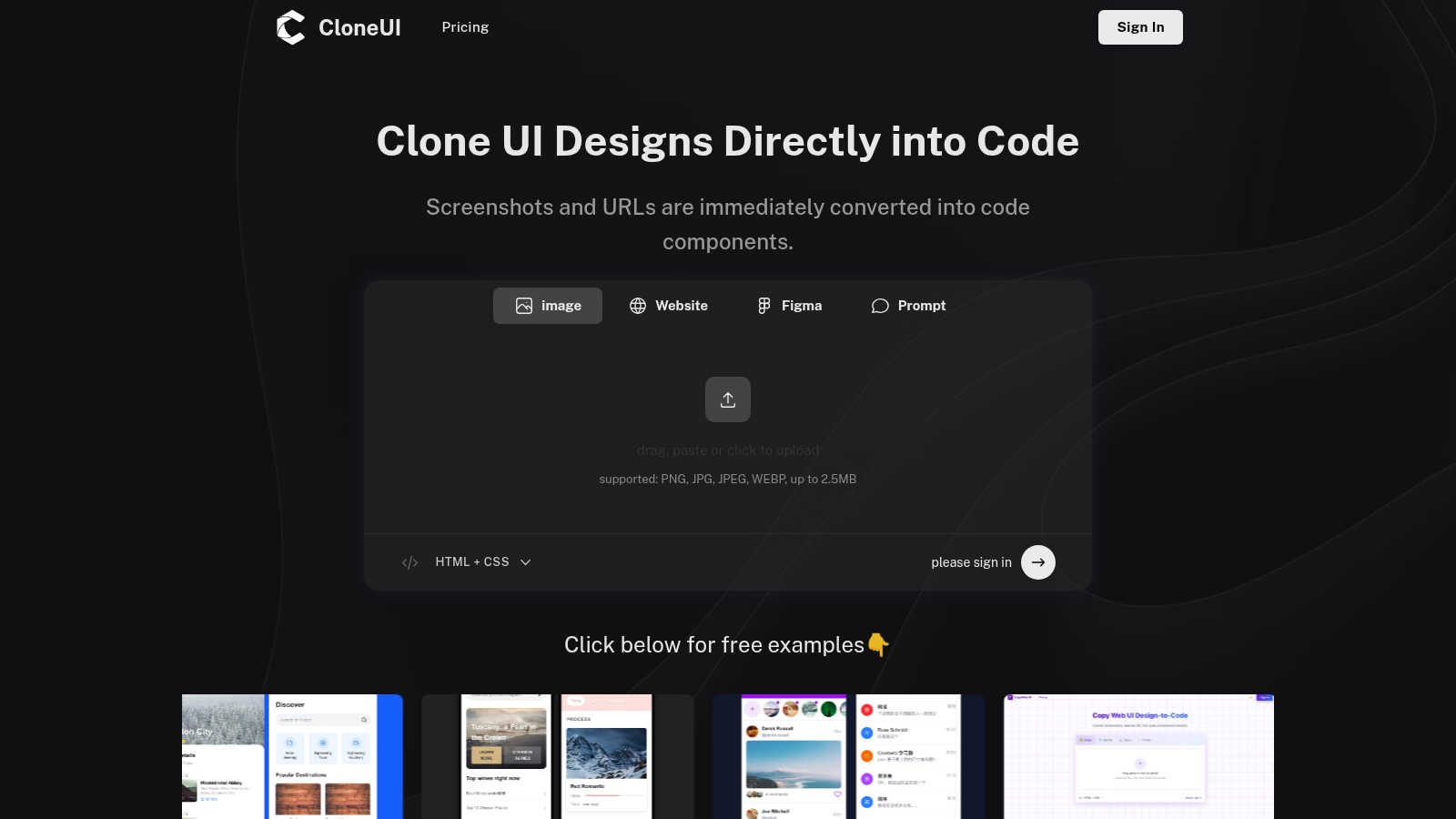
CloneUI instantly converts website screenshots and URLs into clean, responsive React, HTML, or Vue code.
Last updated: March 1, 2026

vaethat
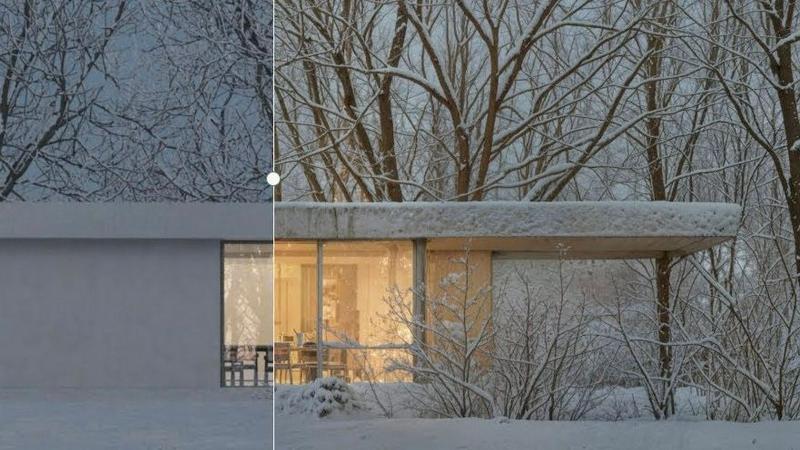
Vaethat instantly enhances architectural renders with specialized AI, preserving your original design.
Last updated: February 28, 2026
Visual Comparison
CloneUI
vaethat
Feature Comparison
CloneUI
Multi-Format Design Input
CloneUI accepts a versatile range of inputs to kickstart the code generation process. You can directly upload a screenshot (PNG, JPG, JPEG, WEBP), paste a live website URL for instant cloning, or integrate with Figma designs. This flexibility ensures that whether your inspiration is a sketch, a competitor's site, or a polished design file, CloneUI can begin the conversion immediately, removing friction from the initial step.
Intelligent Component Recognition
At the heart of CloneUI is its advanced AI that performs intelligent component recognition. It doesn't just see pixels; it identifies and maps UI elements like buttons, navigation bars, cards, and forms. This understanding allows the tool to generate semantically meaningful and structurally clean code, replicating the design's hierarchy and interactivity with a high degree of accuracy, far beyond a simple static copy.
Framework-Specific Code Export
CloneUI empowers developers by offering one-click exports to their preferred front-end frameworks. You can receive your generated code tailored for React, Vue, or as standard, plain HTML and CSS. This feature ensures the output seamlessly integrates into your existing project stack, saving additional hours that would otherwise be spent manually refactoring code to fit a specific framework's syntax and patterns.
Built-In Responsiveness
Every line of code generated by CloneUI is crafted to be inherently responsive. The tool ensures that the cloned interfaces adapt fluidly and seamlessly to any screen size, from desktop monitors to mobile phones. This built-in responsiveness guarantees that the visual fidelity and user experience are maintained across devices, providing a mobile-friendly foundation without requiring manual media query adjustments.
vaethat
Specialized Archviz AI Enhancement
Vaethat's core technology is an AI model trained exclusively on architectural visualization imagery. This specialized training allows it to intelligently upscale resolution, refine fine details like textures and edges, and enhance materials and lighting in a way that generic AI models cannot. It automatically recognizes and properly handles architectural elements, vegetation, and human figures, ensuring enhancements boost realism without introducing artifacts or altering the design's fundamental composition.
Multi-Image Project Workspace
This feature allows professionals to work efficiently with entire archviz projects. Users can drag and drop a complete folder of renders into the workspace, save sessions, and process multiple images in one batch. This streamlines the workflow for finalizing large sets of visuals for a project, ensuring consistent enhancement quality across all images and saving significant time compared to processing files individually.
No-Prompt, Preset-Based Workflow
Vaethat eliminates the guesswork and time consumption associated with prompt engineering and slider adjustments found in general AI tools. The process is deliberately simple: upload your render, choose an enhancement preset tailored for archviz, and export the result. This intuitive approach guarantees predictable, high-quality outcomes without wasting credits on trial-and-error experimentation.
Design Intent Preservation & Artifact Cleanup
A critical feature for professionals, Vaethat's AI is engineered to enhance an image while meticulously maintaining the original composition, lighting mood, and architectural design. Simultaneously, it actively reduces common rendering noise and artifacts, producing cleaner, sharper, and more polished final images that remain true to the artist's vision while achieving a higher standard of finish.
Use Cases
CloneUI
Rapid Prototyping and MVP Development
For startups and entrepreneurs, speed is critical. CloneUI allows you to quickly transform a wireframe or a reference website into a functional, interactive prototype. This enables rapid validation of ideas, user testing, and the creation of minimum viable products (MVPs) in a fraction of the traditional development time, getting feedback loops moving faster.
Developer Workflow Acceleration
Front-end developers can use CloneUI to expedite their daily workflow. Instead of manually coding complex layouts from design handoffs, they can use CloneUI to generate the foundational structure and component code. This allows developers to dedicate their expertise to implementing business logic, connecting APIs, and optimizing performance, significantly boosting productivity.
Design-to-Development Handoff
CloneUI streamlines the often-painful handoff process between UI/UX designers and developers. Designers can upload their final Figma screens or mockups, and CloneUI generates the corresponding code. This creates a clear, tangible bridge, reducing misinterpretation, endless back-and-forth questions, and ensuring the final product aligns precisely with the original design vision.
Learning and Code Reference
Aspiring developers and students can use CloneUI as a powerful learning tool. By inputting URLs of well-designed websites they admire, they can instantly study the clean, responsive HTML and CSS (or React/Vue components) that reconstruct those designs. This provides invaluable, real-world insight into how professional-grade interfaces are built.
vaethat
Finalizing Client Presentation Decks
Architectural visualizers can use Vaethat to give their final renders a last-pass polish before including them in client presentations. The AI enhances sharpness, cleans up noise, and boosts material realism, making the visuals more compelling and professional, which can aid in securing project approvals and impressing stakeholders.
Enhancing Portfolio Imagery
For artists and studios building their online portfolio, Vaethat provides an efficient way to elevate existing work. By upscaling resolution and refining details, it helps create stunning, high-fidelity images that showcase their skills in the best possible light, attracting higher-quality clients and projects.
Batch Processing Project Deliverables
When a visualization project involves dozens of renders for different angles, times of day, or material options, Vaethat's Multi-Image Workspace is invaluable. It allows for the consistent enhancement of an entire set of deliverables in one go, ensuring uniform quality and saving hours of manual post-production work.
Salvaging Noisy or Low-Resolution Renders
Instead of re-rendering a scene at a higher sample count or resolution—a time-consuming and computationally expensive process—artists can use Vaethat to intelligently upscale and denoise existing renders. This recovers time and computational resources while transforming usable but imperfect images into clean, high-resolution finals.
Overview
About CloneUI
CloneUI is a sophisticated AI-powered development tool engineered to bridge the gap between visual design and functional code. It transforms static visuals—be they screenshots, live website URLs, or Figma designs—into clean, production-ready code in seconds. The core value proposition is profound acceleration: by automating the tedious and repetitive task of translating pixels to code, CloneUI liberates developers and designers to focus on higher-level logic, creativity, and innovation. It serves a critical need for web developers, UI/UX designers, and product teams who must rapidly prototype, iterate, or build upon existing design concepts. The tool's intelligent component recognition ensures the output is not just a static replica but a structured, responsive codebase. Ultimately, CloneUI demystifies and streamlines the front-end development process, making high-quality code generation an intuitive and efficient step in any modern workflow.
About vaethat
Vaethat is a specialized AI render enhancer built exclusively for architectural visualization. It is designed for archviz professionals, including 3D artists, architects, and visualization studios, who seek to elevate the final quality of their renders without the complexity of manual post-production or generic AI tools. The core value proposition lies in its purpose-built technology: unlike general AI image enhancers, Vaethat's AI is trained specifically on architectural visualization imagery. This ensures it understands the unique elements of archviz, such as clean geometry, material fidelity, and balanced lighting, resulting in enhancements that respect and preserve the original design intent. The platform offers a streamlined, no-fuss workflow where users can upload single images or entire project folders, select a preset, and receive upscaled, refined, and noise-free images that are presentation-ready for client decks, portfolios, and approvals. Vaethat prioritizes a quality-over-quantity approach, delivering consistent, high-fidelity enhancements that improve clarity, sharpness, and realism with minimal user intervention.
Frequently Asked Questions
CloneUI FAQ
Which input formats are compatible with CloneUI?
CloneUI supports multiple input formats for maximum flexibility. You can upload image files including PNG, JPG, JPEG, and WEBP (up to 2.5MB). Additionally, you can directly paste the URL of any live website for cloning. The tool also offers integration for converting designs directly from Figma, covering the most common sources of design inspiration and assets.
How is the code generated?
The code is generated through a sophisticated AI engine that analyzes your provided input—whether an image or a live webpage. It intelligently identifies visual elements, layout structures, colors, and typography. The AI then maps these recognized components to their corresponding HTML elements and CSS styles, assembling them into a clean, well-structured, and responsive codebase tailored to your selected export framework.
What frameworks does CloneUI support for export?
CloneUI provides export options for several popular front-end frameworks to suit different project needs. You can choose to export your generated code as standard HTML and CSS, or as component-based code for modern frameworks like React or Vue.js. This allows you to immediately integrate the output into your existing development environment without extensive rewriting.
Is the generated code suitable for production use?
Yes, the code generated by CloneUI is designed to be clean, efficient, and production-ready. It focuses on semantic structure, responsiveness, and adherence to good practices. However, as with any automated output, it is considered a robust foundation. Developers are encouraged to review, customize, and enhance the code as needed to meet specific project requirements, security standards, and performance benchmarks.
vaethat FAQ
What makes Vaethat different from other AI image enhancers?
Vaethat is not a general-purpose AI tool. It is specialized technology trained exclusively on architectural visualization. This means it understands the specific needs of archviz, such as preserving clean lines, correctly enhancing materials like wood and concrete, and realistically improving vegetation and people. The result is more consistent, reliable, and context-aware enhancements compared to tools that treat all images the same.
Can I use Vaethat with renders from V-Ray, Lumion, Enscape, etc.?
Yes, absolutely. Vaethat is render-engine agnostic. It works with any image file exported from your visualization software, whether it's V-Ray, Corona, Lumion, Enscape, Twinmotion, 3ds Max, SketchUp, or others. You simply upload your final PNG, JPG, or TIFF render for enhancement.
How does the credit system work?
Credits are consumed based on the output resolution of your enhanced image. The platform clearly indicates how many credits an enhancement will use before you process it. This transparent system allows you to manage your usage effectively across different projects and image sizes.
Does Vaethat use my uploaded renders to train its AI models?
No. According to the provided content, Vaethat does not use customer-uploaded architectural renders to train its AI models. This protects your intellectual property and ensures your project visuals remain confidential.
Alternatives
CloneUI Alternatives
CloneUI is an AI-powered design-to-code tool that converts screenshots, URLs, and Figma files into clean, responsive code. It sits at the intersection of design tools, development, and low-code platforms, streamlining the process of turning visual concepts into functional web components. Users often explore alternatives for various reasons. These can include budget constraints, the need for different framework support, or a preference for alternative workflows and integrations. The specific feature set, such as the ability to handle complex components or export to a particular tech stack, is also a key consideration. When evaluating other options, focus on core capabilities. Prioritize tools that accurately interpret your design inputs and output production-ready, maintainable code. Consider the learning curve, integration with your existing design tools, and the quality of the generated code for your preferred frameworks.
vaethat Alternatives
Vaethat is an AI-powered tool in the architectural visualization and design software category. It specializes in intelligently upscaling and refining 3D renders to enhance clarity, detail, and realism for final presentation. Professionals may explore alternatives for various reasons, such as budget constraints, a need for different feature sets like broader image editing capabilities, or specific workflow integrations. The search often centers on finding a tool that aligns with their project scale, technical requirements, and desired output quality. When evaluating options, key considerations include the core AI enhancement capabilities, the tool's fidelity in preserving original design intent, the simplicity of the user workflow, and the overall value relative to cost. The goal is to find a solution that efficiently elevates render quality without introducing unnecessary complexity.