
CloneUI vs Proofapp
Side-by-side comparison to help you choose the right AI tool.

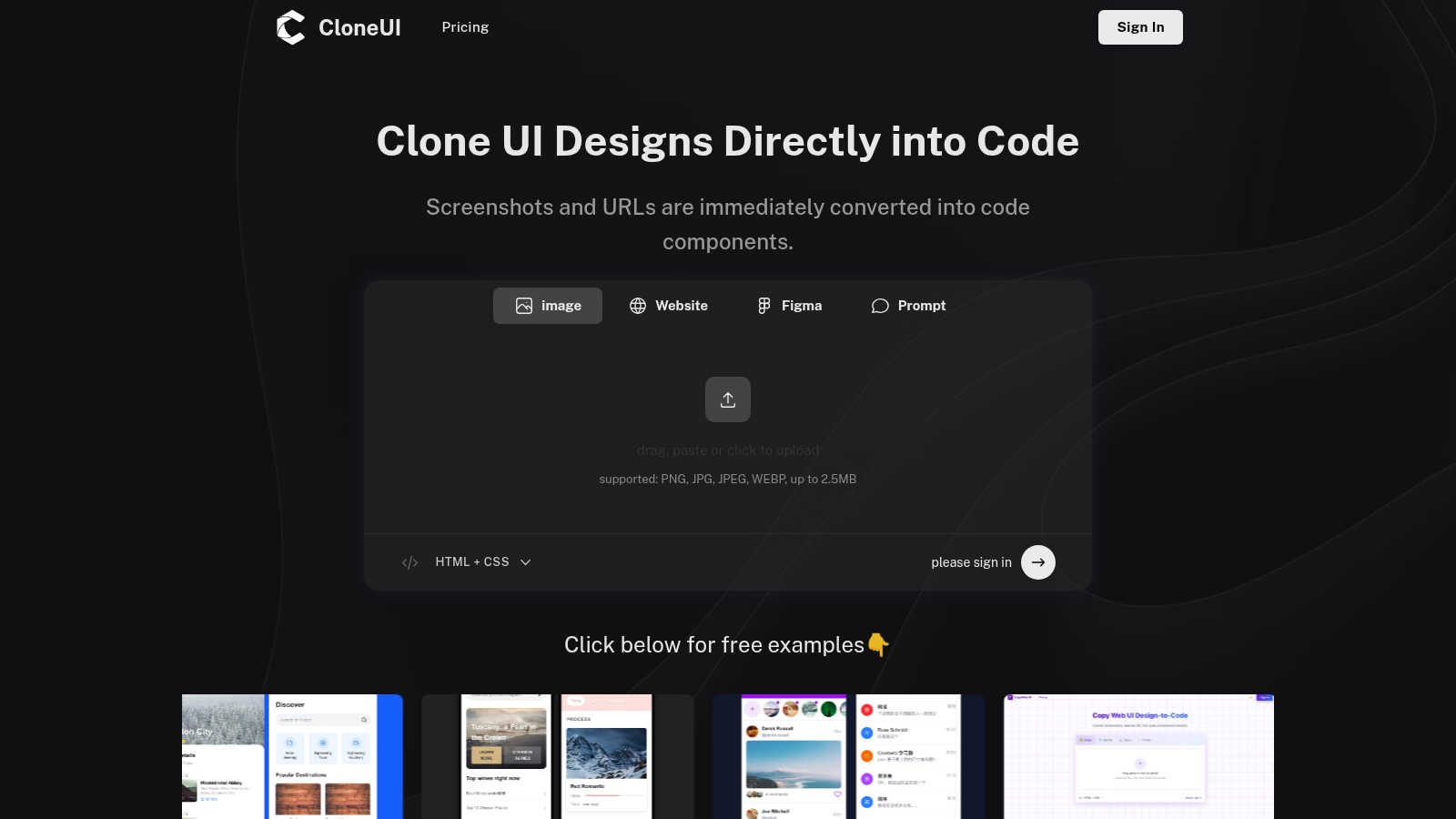
CloneUI instantly converts website screenshots and URLs into clean, responsive React, HTML, or Vue code.
Last updated: March 1, 2026

Proofapp
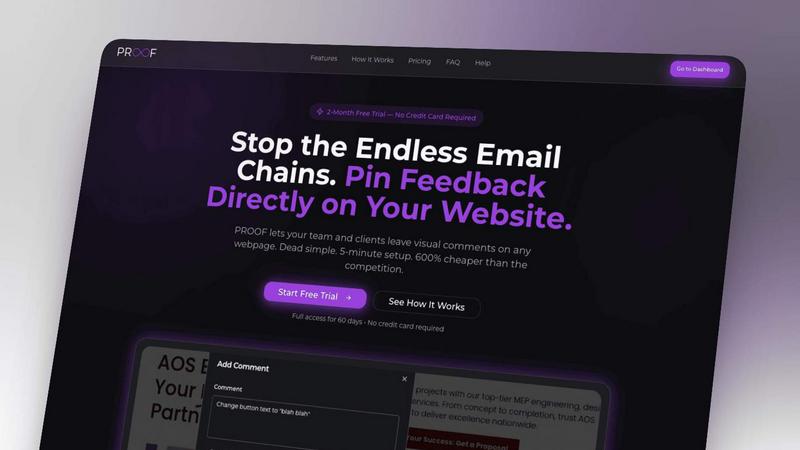
Proofapp transforms feedback by enabling visual comments directly on your website, streamlining design reviews.
Last updated: March 4, 2026
Visual Comparison
CloneUI
Proofapp
Feature Comparison
CloneUI
Multi-Format Design Input
CloneUI accepts a versatile range of inputs to kickstart the code generation process. You can directly upload a screenshot (PNG, JPG, JPEG, WEBP), paste a live website URL for instant cloning, or integrate with Figma designs. This flexibility ensures that whether your inspiration is a sketch, a competitor's site, or a polished design file, CloneUI can begin the conversion immediately, removing friction from the initial step.
Intelligent Component Recognition
At the heart of CloneUI is its advanced AI that performs intelligent component recognition. It doesn't just see pixels; it identifies and maps UI elements like buttons, navigation bars, cards, and forms. This understanding allows the tool to generate semantically meaningful and structurally clean code, replicating the design's hierarchy and interactivity with a high degree of accuracy, far beyond a simple static copy.
Framework-Specific Code Export
CloneUI empowers developers by offering one-click exports to their preferred front-end frameworks. You can receive your generated code tailored for React, Vue, or as standard, plain HTML and CSS. This feature ensures the output seamlessly integrates into your existing project stack, saving additional hours that would otherwise be spent manually refactoring code to fit a specific framework's syntax and patterns.
Built-In Responsiveness
Every line of code generated by CloneUI is crafted to be inherently responsive. The tool ensures that the cloned interfaces adapt fluidly and seamlessly to any screen size, from desktop monitors to mobile phones. This built-in responsiveness guarantees that the visual fidelity and user experience are maintained across devices, providing a mobile-friendly foundation without requiring manual media query adjustments.
Proofapp
Visual Commenting
Proofapp's visual commenting feature allows users to click anywhere on a screenshot to leave contextual feedback. This eliminates ambiguity, allowing team members to specify exactly where changes are needed, improving clarity and reducing misunderstandings.
Multi-Breakpoint Testing
Automatically capture and review your website at both desktop and mobile breakpoints. This feature ensures that feedback is relevant and specific to each format, making it easier to optimize designs for all devices.
Real-Time Collaboration
With real-time collaboration, users can see comments from their team as they are made. This instantaneous feedback loop allows for immediate responses, progress tracking, and a more dynamic review process, enhancing overall productivity.
Secure Share Links
Generate secure, expirable links to share projects with clients. This feature provides a safe way for clients to view and comment on designs without needing to create an account, simplifying the review process and facilitating quick feedback.
Use Cases
CloneUI
Rapid Prototyping and MVP Development
For startups and entrepreneurs, speed is critical. CloneUI allows you to quickly transform a wireframe or a reference website into a functional, interactive prototype. This enables rapid validation of ideas, user testing, and the creation of minimum viable products (MVPs) in a fraction of the traditional development time, getting feedback loops moving faster.
Developer Workflow Acceleration
Front-end developers can use CloneUI to expedite their daily workflow. Instead of manually coding complex layouts from design handoffs, they can use CloneUI to generate the foundational structure and component code. This allows developers to dedicate their expertise to implementing business logic, connecting APIs, and optimizing performance, significantly boosting productivity.
Design-to-Development Handoff
CloneUI streamlines the often-painful handoff process between UI/UX designers and developers. Designers can upload their final Figma screens or mockups, and CloneUI generates the corresponding code. This creates a clear, tangible bridge, reducing misinterpretation, endless back-and-forth questions, and ensuring the final product aligns precisely with the original design vision.
Learning and Code Reference
Aspiring developers and students can use CloneUI as a powerful learning tool. By inputting URLs of well-designed websites they admire, they can instantly study the clean, responsive HTML and CSS (or React/Vue components) that reconstruct those designs. This provides invaluable, real-world insight into how professional-grade interfaces are built.
Proofapp
Freelance Projects
Freelancers can leverage Proofapp to collect client feedback more efficiently. By utilizing visual comments, they can present designs clearly, ensuring clients provide precise and actionable input without the clutter of emails.
Design Teams
Design teams can benefit from Proofapp's visual feedback capabilities to receive clear and concise input on their work. The ability to pin comments directly on designs minimizes confusion and allows for focused revisions that enhance workflow.
Marketing Campaigns
Marketing teams can use Proofapp to review landing pages and promotional materials collaboratively. By visualizing feedback, they can ensure that all team members are aligned with the campaign goals and messaging before launch.
Agency Projects
Agencies managing multiple projects can streamline the feedback process with Proofapp. The platform organizes comments and revisions in one place, making it easier to manage client expectations and deliver high-quality results promptly.
Overview
About CloneUI
CloneUI is a sophisticated AI-powered development tool engineered to bridge the gap between visual design and functional code. It transforms static visuals—be they screenshots, live website URLs, or Figma designs—into clean, production-ready code in seconds. The core value proposition is profound acceleration: by automating the tedious and repetitive task of translating pixels to code, CloneUI liberates developers and designers to focus on higher-level logic, creativity, and innovation. It serves a critical need for web developers, UI/UX designers, and product teams who must rapidly prototype, iterate, or build upon existing design concepts. The tool's intelligent component recognition ensures the output is not just a static replica but a structured, responsive codebase. Ultimately, CloneUI demystifies and streamlines the front-end development process, making high-quality code generation an intuitive and efficient step in any modern workflow.
About Proofapp
Proofapp is a cutting-edge visual feedback and website review platform designed to enhance collaboration among designers, developers, and their clients. By allowing users to upload any website URL, Proofapp automatically captures high-quality screenshots for both desktop and mobile views. This streamlined process not only saves time but also eliminates the confusion caused by traditional feedback methods such as email chains and vague notes. With features that empower users to pin comments directly on designs, reply in threads, and attach relevant files, Proofapp makes feedback actionable and organized. It caters to freelancers, small teams, and agencies alike, fostering efficient communication and collaboration. Ultimately, Proofapp transforms the feedback process into a clear, visual, and productive experience, allowing projects to progress smoothly, and ultimately leading to faster launches and satisfied clients.
Frequently Asked Questions
CloneUI FAQ
Which input formats are compatible with CloneUI?
CloneUI supports multiple input formats for maximum flexibility. You can upload image files including PNG, JPG, JPEG, and WEBP (up to 2.5MB). Additionally, you can directly paste the URL of any live website for cloning. The tool also offers integration for converting designs directly from Figma, covering the most common sources of design inspiration and assets.
How is the code generated?
The code is generated through a sophisticated AI engine that analyzes your provided input—whether an image or a live webpage. It intelligently identifies visual elements, layout structures, colors, and typography. The AI then maps these recognized components to their corresponding HTML elements and CSS styles, assembling them into a clean, well-structured, and responsive codebase tailored to your selected export framework.
What frameworks does CloneUI support for export?
CloneUI provides export options for several popular front-end frameworks to suit different project needs. You can choose to export your generated code as standard HTML and CSS, or as component-based code for modern frameworks like React or Vue.js. This allows you to immediately integrate the output into your existing development environment without extensive rewriting.
Is the generated code suitable for production use?
Yes, the code generated by CloneUI is designed to be clean, efficient, and production-ready. It focuses on semantic structure, responsiveness, and adherence to good practices. However, as with any automated output, it is considered a robust foundation. Developers are encouraged to review, customize, and enhance the code as needed to meet specific project requirements, security standards, and performance benchmarks.
Proofapp FAQ
How does Proofapp improve the feedback process?
Proofapp improves the feedback process by providing a visual platform where comments can be pinned directly on designs. This reduces miscommunication and allows for clearer, more actionable feedback.
Is there a free trial available for Proofapp?
Yes, Proofapp offers a free trial that allows users to experience full access to all features for 60 days without the need for a credit card.
Can I share my projects with clients without them needing an account?
Absolutely! Proofapp allows users to generate secure share links for clients, enabling them to view and comment on projects without requiring an account.
What types of teams can benefit from using Proofapp?
Proofapp is ideal for freelancers, small design teams, marketing teams, and agencies. It provides tools that enhance collaboration and streamline the feedback process across various project types.
Alternatives
CloneUI Alternatives
CloneUI is an AI-powered design-to-code tool that converts screenshots, URLs, and Figma files into clean, responsive code. It sits at the intersection of design tools, development, and low-code platforms, streamlining the process of turning visual concepts into functional web components. Users often explore alternatives for various reasons. These can include budget constraints, the need for different framework support, or a preference for alternative workflows and integrations. The specific feature set, such as the ability to handle complex components or export to a particular tech stack, is also a key consideration. When evaluating other options, focus on core capabilities. Prioritize tools that accurately interpret your design inputs and output production-ready, maintainable code. Consider the learning curve, integration with your existing design tools, and the quality of the generated code for your preferred frameworks.
Proofapp Alternatives
Proofapp is a visual feedback and website review platform designed to streamline collaboration among designers, developers, and clients. By enabling users to capture screenshots of websites and pin comments directly onto designs, it enhances the review process and fosters clearer communication. Positioned in the design tools category, Proofapp is particularly valuable for freelancers and agencies managing multiple projects. Users often seek alternatives to Proofapp due to various factors, such as pricing structures, specific feature sets, or platform compatibility. When exploring alternatives, it's essential to consider aspects like ease of use, integration capabilities, and the ability to centralize feedback to prevent miscommunication. Evaluating how well an alternative aligns with your workflow and project requirements can lead to a more efficient design review process.